
02/07/2026

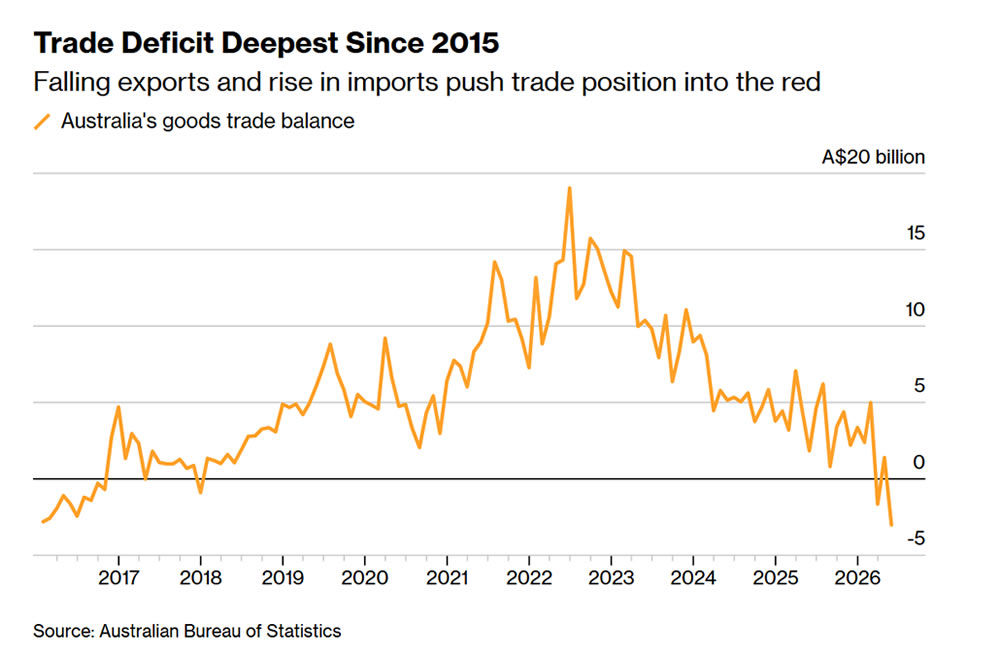
Australia recorded an unexpected trade deficit in May, marking the widest gap since 2015. The country’s exports tumbled at the sharpest pace so far this year, while imports maintained a strong upward momentum, driven by soaring fuel prices and robust demand for data center equipment.
According to official data released by the Australian Bureau of Statistics on Thursday, Australia’s merchandise exports fell 6.9% month-on-month in May, hitting the largest monthly decline of the year. Meanwhile, imports rose by nearly 3%. The combined movement resulted in a trade deficit of just over 3 billion Australian dollars, equivalent to 2.1 billion US dollars. This is Australia’s second trade deficit within a single year and the biggest monthly shortfall recorded since 2015.
Spiking oil prices stemming from Middle East geopolitical tensions have significantly pushed up Australia’s import costs. Fuel and lubricant imports surged to a record high of 8.6 billion Australian dollars in May, marking the second consecutive month that such import expenditure has exceeded 8 billion Australian dollars and substantially inflating the country’s overall import bill.
Booming domestic infrastructure investment also continued to boost import growth. Australian enterprises have ramped up spending on data center construction, driving sustained growth in imports of related equipment. Although down from the record level seen in March, such imports remained elevated. According to HSBC Holdings, Australia is among the world’s leading countries in terms of data center construction scale, and strong demand for digital infrastructure equipment has further widened the country’s trade deficit.
[Disclaimer] Forex trading involves risk; please invest with caution. This content is for informational purposes and objective analysis only, and does not constitute any investment advice, basis for buying/selling, or guarantee of returns. Investors should make independent decisions based on their own financial situation and risk tolerance, and bear their own investment risks.
Related Posts