
14/08/2026

Global risk sentiment improved markedly this week, with Asian stock markets extending their upward trend to post a fourth consecutive weekly gain. Cooling U.S. inflation has reinforced market expectations that the Federal Reserve will keep interest rates unchanged in September. Supported by a strong rebound in the tech sector, equity markets across the Asia-Pacific region trended higher overall.
In equities, the MSCI Asia Pacific Index rose 0.3% for the week, bringing its cumulative weekly gain to 2.6%. The Korea Composite Stock Price Index (KOSPI), a key regional benchmark for AI-related trading, outperformed the broader market. Core semiconductor stocks staged a sharp recovery, with Samsung Electronics and SK Hynix both surging more than 14% over the week.
Following a market sell-off last month, capital flows have returned aggressively to the artificial intelligence sector, serving as the core driving force behind the current equity rebound. The MSCI All Country World Index hit a fresh record high this week alongside a strong U.S. market rally. The S&P 500 closed at an all-time high on Thursday, while the Nasdaq 100 climbed more than 1% to its highest level since late June, reflecting a full recovery in market risk appetite.
The U.S. Treasury market also signaled dovish policy prospects. Benefiting from cooler U.S. wholesale inflation data for July, Treasury prices extended Thursday’s gains. The rate-sensitive 2-year U.S. Treasury yield held steady at 4.15%, after falling 6 basis points in the previous session. Current money market pricing indicates a mere 35% probability of a Fed rate hike in September.
Recent fundamental changes, including softer-than-expected U.S. nonfarm payroll data, falling oil prices and two consecutive rounds of moderating inflation readings, have significantly eased pressure on the Fed to tighten monetary policy in the near term. Although lingering uncertainties over Middle East geopolitics continue to cap market sentiment, investors remain focused on the AI industrial chain, particularly the valuation recovery of semiconductor stocks after the sector’s sharp correction in July.
Detailed inflation data showed that the U.S. July Producer Price Index (PPI) rose 4.7% year-on-year, down notably from 5.5% in June. The cooling pace exceeded economist consensus forecasts, pointing to a sustained easing of inflationary pressures and providing solid grounds for the Fed to pause rate hikes.
Commodity markets exhibited divergent performance. Energy assets faced downward pressure, with Brent crude dipping 0.4% in early Friday trading to $86.74 per barrel, following a more than 2% drop on Thursday. Precious metals also weakened, with gold falling 0.8% to $4,317 per ounce, as stronger risk appetite weighed on safe-haven demand.
Meanwhile, hidden risks persist in the long-dated U.S. Treasury market. Despite short-term Treasury price gains and lower yields, the yield on the 30-year U.S. Treasury auction hit a 25-year high. This indicates that investors are demanding higher risk premiums to absorb expanding U.S. fiscal deficits, leaving long-term U.S. bonds under lingering pressure.
On the policy front, the U.S. has adjusted its trade strategy. The Trump administration imposed a 100% tariff on imported drone systems and components, aiming to reduce reliance on foreign drone supplies and strengthen domestic industrial chain independence.
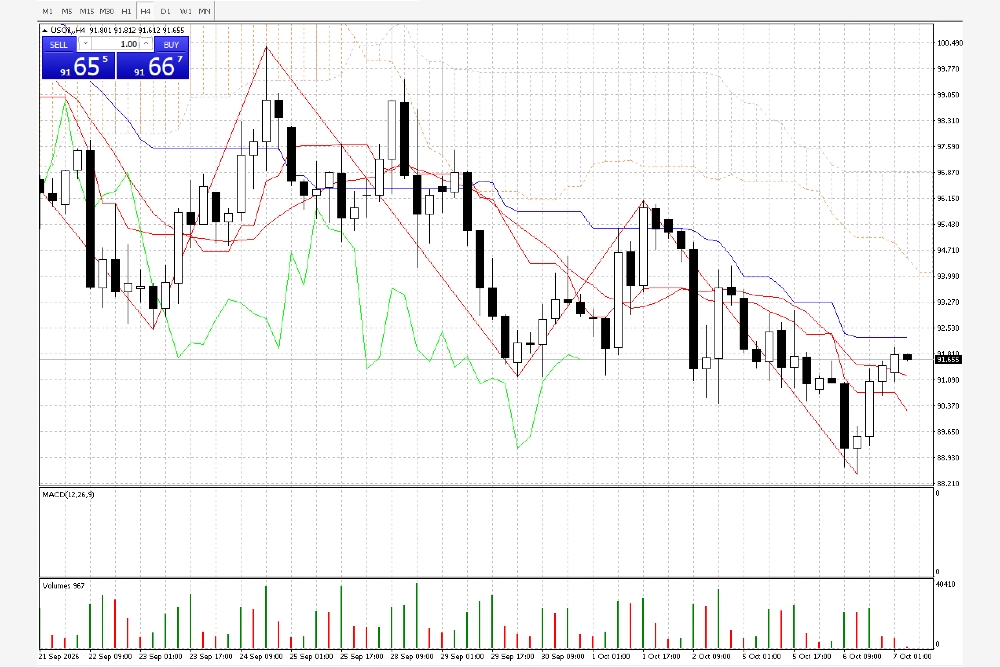
In the foreign exchange market, the Japanese yen remained weak despite official hawkish signals. The USD/JPY pair stabilized near the 160 level and traded at 159.43 on Friday with muted volatility.
According to market sources, the Bank of Japan (BOJ) is highly likely to raise interest rates in September or October. Persistent yen depreciation has intensified imported inflationary pressures. Meanwhile, the Japanese government intends to consolidate the effects of recent yen intervention. The overlapping policy objectives have significantly lifted the odds of imminent monetary tightening by the BOJ.
[Disclaimer] Forex trading involves risk; please invest with caution. This content is for informational purposes and objective analysis only, and does not constitute any investment advice, basis for buying/selling, or guarantee of returns. Investors should make independent decisions based on their own financial situation and risk tolerance, and bear their own investment risks.
Related Posts