14/05/2026

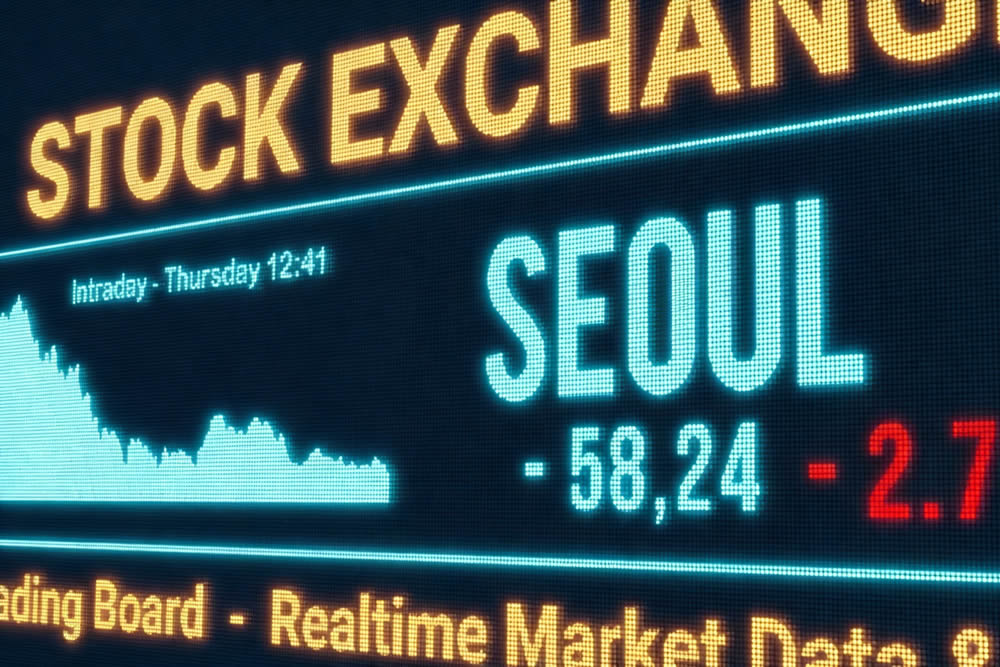
In South Korea’s stock market, which has a market value of $4.6 trillion, an atmosphere of frantic speculation pervades everywhere today. Over the past year, South Korea’s stock market has soared by 200% cumulatively, far outpacing any other market in the world, filling South Korean people with joy. To seize this upward trend, local residents have borrowed a record amount of money to increase their bets on stocks, driving market trading volume to an all-time high. Daily stock price fluctuations of 5% or more have become increasingly common — making South Korea’s Composite Stock Price Index (KOSPI) the most volatile major stock index in the world.
Nowadays, the fear of missing out (FOMO) is intensifying in offices, restaurants, and family gatherings across South Korea. This anxiety has even prompted investors to start buying stocks for their children. According to data compiled by Toss Securities, the number of new stock market accounts opened by people under 18 in the first quarter of this year increased nearly 10 times compared with the same period last year.
“The sentiment in the retail market is extremely high, almost to the point of madness,” said Jang Eun-jeong, a 37-year-old video producer in Seoul. Her YouTube stock investment program has seen its viewership grow from a handful to more than 1.3 million as the stock market soars. “Will we ever see such a strong upward trend again?”
The core driver of this trading frenzy comes from the central role played by South Korean chipmakers in the global artificial intelligence boom — it has pushed this long-dormant market into the global spotlight, becoming one of the key indicators to measure the sustainability of the AI boom.
Although bullish investors cite record profits from leading companies such as Samsung Electronics and SK Hynix to support the current upward trend, the market has shown signs of a sudden reversal this week. On Tuesday, South Korea’s Composite Stock Price Index (KOSPI) lost about $300 billion in market value in less than two hours. The reasons behind this are, on the one hand, market concerns about overheating gains, and on the other hand, a senior official’s long post on Facebook proposing to issue “citizen dividends” to citizens by levying excess taxes on AI-related profits. However, in the end, the stock market recovered more than half of its losses, and the South Korean government later clarified that the remark was only a personal opinion, not an official policy.
“People who are afraid of missing out, seeing others make big money, often rush into the market recklessly and often overuse leverage. But no one knows when the bull market will end,” said Dr. Kim Tae-hwan. He runs an otolaryngology clinic in Gangseo-gu, Seoul, and began sharing his investment returns on social media a year ago.
“The most dangerous thing is that people often increase their investment in the final stage of the market, only to suffer losses. I have personally experienced this — during the 2018 Bitcoin boom, I increased my position at the price peak and ended up losing badly,” he added.
The current upward trend of South Korea’s stock market is rare both domestically and globally. Driven by leveraged financing, South Korea’s stock market has surpassed many peers to become the world’s seventh-largest stock market; the market value of tech giant Samsung Electronics has even exceeded the $1 trillion mark, ranking as the second most valuable company in Asia.
The upward momentum of South Korea’s stock market is mainly due to the return of 14 million day traders. For most of 2025, these traders remained on the sidelines, but now they have been attracted by this upward trend, which many regard as a “once-in-a-lifetime” opportunity, and have re-entered the market. Since the beginning of this year, they have invested about 37.7 trillion won (approximately $25.3 billion) in South Korea’s stock market. In sharp contrast, foreign investors are accelerating their withdrawal, with net sales about twice the amount invested by South Korean domestic investors.
Foreign capital outflows have continued since the beginning of this month, making the scale of foreign capital outflows in May expected to be the third-largest single-month outflow on record, second only to the unprecedented outflows in February and March this year.
Choi Jae-won, a professor of economics at Seoul National University, said: “More and more people now believe that social mobility can no longer be achieved through traditional channels, but only through speculative assets. After witnessing people get rich overnight in the cryptocurrency field, investors are now flocking to stocks such as SK Hynix, seeing them as a better choice for quickly accumulating wealth.”
According to data from the Korea Financial Investment Association, the margin balance of South Korea’s stock market reached a record 36.3 trillion won at the beginning of May, an increase of 32% from the end of December last year. But this data only reflects part of the real situation — many loans used for stock trading are classified into other categories, and credit provided by small financial institutions may not be included in official statistics. This has also raised market concerns about two major issues: first, how long the current stock market rally can last, and second, how fast the market may reverse if it does.
South Koreans’ obsession with stocks is most evident on social media. The platforms are filled with trading tips and investment returns shared by internet celebrities and retail investors, further fueling people’s fear of missing out. This competition is no longer limited to “beating the market”, but has also spread among friends, colleagues, and even anonymous online users.
The rise of South Korea’s stock market is also part of the global artificial intelligence boom. Previously, due to the closer ties between South Korean chipmakers and traditional industries, the country largely missed the early AI-related gains. But with the surge in AI-driven chip demand and the continuous tension in the supply chain, this situation has completely changed. In addition, the comprehensive financial reforms promoted by President Lee Jae-myung, which aim to stimulate stock market vitality, have also injected strong momentum into this rally.
Currently, many analysts believe that South Korea’s stock market still has room for growth. In addition to the strong profit performance of companies such as SK Hynix — whose quarterly profits increased fivefold due to the surge in memory chip prices — South Korea’s overall economy has returned to the growth track. This has prompted many Wall Street banks to raise their target prices for South Korea’s Composite Stock Price Index (KOSPI) to 8,500 points, 9,000 points, and even 10,000 points in an optimistic scenario. On Thursday, the KOSPI index rose by 1.9% at one point and finally closed at 7,991.04 points.
[Disclaimer] Forex trading involves risk; please invest with caution. This content is for informational purposes and objective analysis only, and does not constitute any investment advice, basis for buying/selling, or guarantee of returns. Investors should make independent decisions based on their own financial situation and risk tolerance, and bear their own investment risks.
Related Posts