
12/05/2026

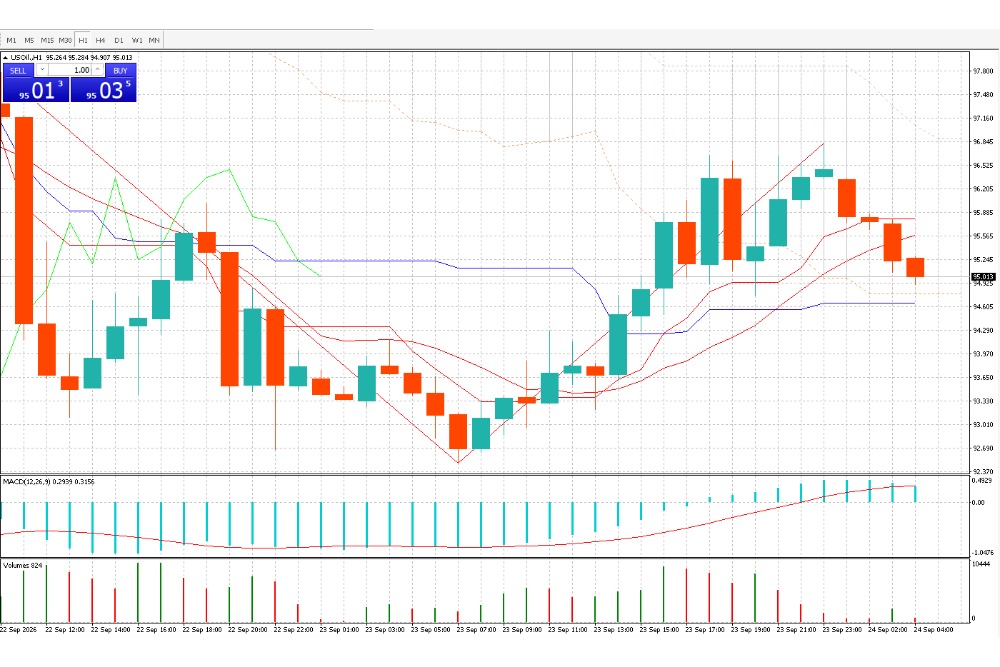
U.S. President Trump expressed doubts about the Iran ceasefire agreement, sparking market concerns that the closure of the Strait of Hormuz would be extended, which in turn pushed up oil prices. Meanwhile, South Korea’s proposal to distribute dividends to citizens using artificial intelligence profit taxes led to sharp fluctuations in Asian stock markets.
Currently, U.S.-Iran negotiations are at an impasse, and the Strait of Hormuz remains closed. Affected by this, Brent crude oil prices rose 0.6% to around $105 per barrel, indicating that global energy costs will remain high. High energy prices have put pressure on the bond market, with the 10-year U.S. Treasury yield rising 1 basis point to 4.42%. In addition, driven by market safe-haven demand, the U.S. dollar strengthened against all G10 currencies.
In the South Korean market, the Korea Composite Stock Price Index (KOSPI) fell 3.1%. Earlier, Kim Yong-beom, Chief of the Presidential Policy Office of South Korea, proposed that South Korea should issue dividends to citizens by levying a profit tax on the artificial intelligence industry. This remark triggered sharp volatility in the stock market, mainly because investors struggled to clearly understand the specific details and implementation path of the proposal.
Global stock markets were generally under pressure: the MSCI Asia-Pacific Index fell 0.4%, European stock index futures indicated that European stock markets would open 0.7% lower; while Wall Street benchmark stock index futures contracts pulled back after hitting a record high on Monday.
Although strong U.S. corporate earnings and the recovery of AI-related transactions have driven Wall Street institutions to raise their year-end market targets for a new round, the new tensions in the Middle East may still hinder the upward momentum of global stock markets. Currently, market focus has shifted to the U.S. inflation data to be released on Tuesday, which will reflect the specific transmission degree of price pressures caused by the war and may affect the Federal Reserve’s future interest rate adjustment decisions.
The U.S.-Iran ceasefire agreement is currently hanging in the balance. Trump has clearly rejected the latest peace proposal put forward by Tehran, not only calling the agreement “hanging by a thread” but also bluntly stating that Iran’s response was “a mess” and even saying he “didn’t even finish reading it.” However, Trump did not clearly state whether the United States would resume military strikes against Iran, as he had previously threatened, if Iran’s leadership did not accept his conditions. In addition, Trump revealed in an interview with Fox News earlier on Monday that he is considering restarting a plan to escort ships through the Strait of Hormuz.
Mark Haefele of UBS’s Chief Investment Office commented: “It remains difficult for the U.S. and Iran to reach a consensus, the relevant risks are still high, and both sides are also under pressure to promote the reaching of an agreement.”
In other news, Trump will travel to Beijing on Thursday to hold an important summit with Chinese
[Disclaimer] Forex trading involves risk; please invest with caution. This content is for informational purposes and objective analysis only, and does not constitute any investment advice, basis for buying/selling, or guarantee of returns. Investors should make independent decisions based on their own financial situation and risk tolerance, and bear their own investment risks.
Related Posts

23/09/2026
23/09/2026