
08/04/2026

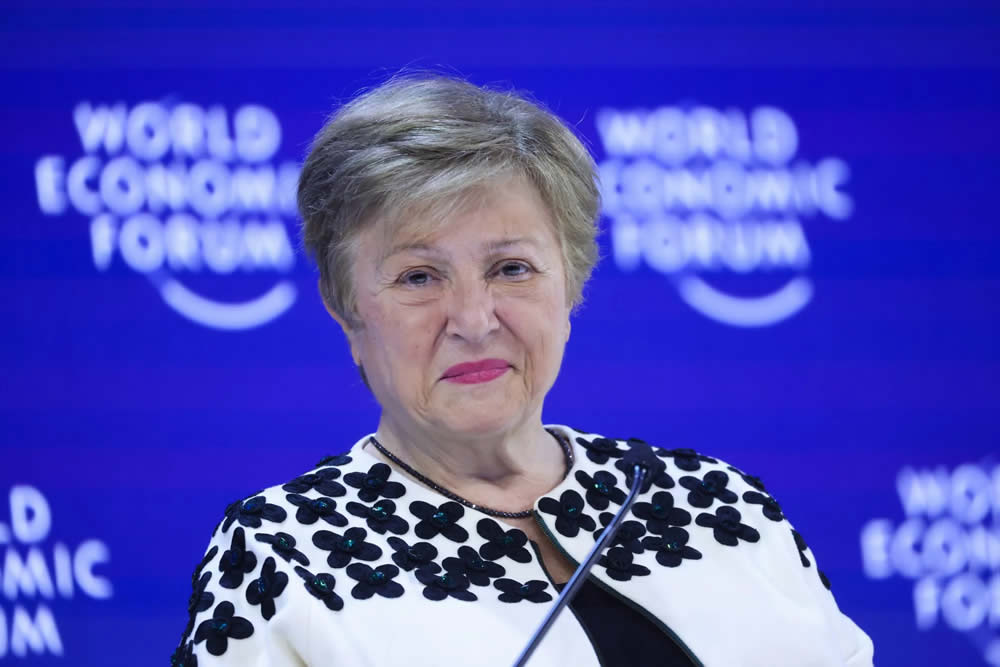
Kristalina Georgieva, Managing Director of the International Monetary Fund (IMF), warned in an interview with Bloomberg News in Washington on Tuesday that the IMF is prepared to lower its global economic growth forecast due to the Iran war, stating clearly that the world economy is seriously insufficiently prepared to cope with such shocks, with enormous risks lurking.
Georgieva said that before the U.S.-Israeli attacks on Iran, the IMF had planned to raise its 2026 global economic growth forecast, but the outbreak of the war has completely changed this plan. “Given the impact of the war, we will lower the forecast.” It is reported that the new global economic data will be released next week, when the IMF and the World Bank will host policymakers from around the world in Washington. Georgieva emphasized that the core message she wants to convey to all countries is just one sentence: “Be prepared.”
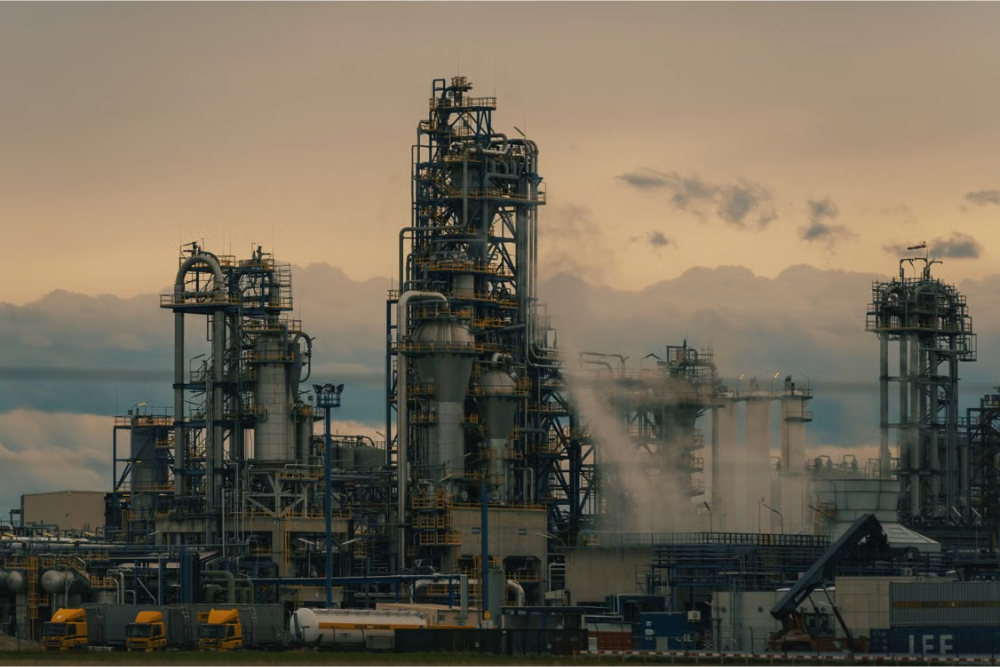
She explained that the Iran war has cut off transportation routes in the energy-rich Gulf region, triggering a “negative supply shock, which means it will push up prices of various commodities,” so “focusing on inflation should be a top priority for all countries.” It is understood that the Strait of Hormuz, a transportation route for one-fifth of the world’s oil and natural gas, has suffered the most severe disruption in global energy supply in history due to blocked navigation, with global crude oil supply currently reduced by about 13%.
Georgieva further warned that compared with before the outbreak of the COVID-19 pandemic, the world is now less prepared to deal with a major economic recession and has weaker response tools available. She pointed out that after enduring the double shocks of the COVID-19 pandemic and the Ukraine war, the world is now facing the blow of the Iran war, and the policy adjustment space of various countries has become very limited. In addition, the growing tensions among major powers not only make various emergencies occur more frequently, but also greatly hinder the efficiency of international cooperation in responding to crises. At the same time, she also mentioned that few governments have taken practical and effective measures to repay the huge debts accumulated after the COVID-19 pandemic.
In addition to energy shortages, the war has also severely impacted the global fertilizer market, which may further exacerbate global food insecurity. The United Nations World Food Programme warned last month that if the conflict persists until the middle of this year and oil prices remain above $100 per barrel, nearly 45 million people will fall into a state of “severe food insecurity.” It is reported that the Persian Gulf region accounts for nearly half of the world’s urea production, with about 16 million tons of seaborne fertilizers transported through the Strait of Hormuz every year, accounting for one-third of the global total seaborne fertilizer trade. The blocked navigation of the strait has directly pushed up food production costs, and more than 20 cargo ships carrying nearly 1 million tons of fertilizers are currently stranded in the strait.
The surge in energy prices has become an undeniable fact. As of Tuesday, the price of Brent crude oil futures was about $110 per barrel, a sharp increase from about $70 per barrel before the war broke out on February 28; the prices of physical crude oil and key derivatives such as diesel and aviation fuel have also risen sharply. According to the Flush Financial Database, the highest price of Brent crude oil futures once reached $111.8 per barrel on April 7, showing an overall volatile upward trend recently, with a 15% increase in the past month.
Tensions in geopolitics have further heightened concerns in the energy market. U.S. President Donald Trump threatened that if Iran refuses to lift the blockade on oil transportation, he will take large-scale escalation actions later on Tuesday; while Iran clearly stated that it will retaliate by attacking more energy targets in the Gulf region. It is reported that Trump has set a deadline for Iran negotiations at 20:00 Eastern Time on April 7 (08:00 Beijing Time on April 8), threatening to destroy Iran’s bridges, power plants and other civilian infrastructure. Iranian President Ebrahim Raisi said that more than 14 million Iranians have registered to volunteer to defend the country. The high antagonism between the two sides has further increased the risk of a worsening global fuel crisis. It is worth noting that the Strait of Hormuz is not completely blocked at present; some oil tankers pass through “invisibly” by turning off their Automatic Identification Systems (AIS), and the shipping volume has recovered to about 15 ships per day, but it is still far below the normal level, and the shipping disruption is expected to be prolonged.
Georgieva emphasized that the impact of energy shortages will cover the whole world, but this impact is obviously asymmetric. “If you are near the conflict area, you will be more seriously affected; if you are an energy-importing country, you will feel more pain; if you have little or no fiscal space and no buffer at all, not only will you be affected yourself, but the impact on domestic enterprises and households will be even greater.” She added that poor and vulnerable countries lacking energy reserves will be the hardest hit, and some countries have sought financing assistance from the IMF.
Regarding the policy response of various countries, Georgieva put forward suggestions: central banks of all countries must “focus on inflation while avoiding stifling economic growth.” She said that the current economic situation is different from the economic recession caused by the pandemic in 2020, when fiscal and monetary policies were coordinated under the dual impact of demand and supply, but the current situation is more delicate. “We must be very careful when responding to the shock; this is an extremely sensitive moment.”
In terms of the fiscal budget, governments around the world—especially those of Asian countries that are heavily dependent on energy from the Gulf region—have successively introduced measures to ease the pressure of soaring energy prices, such as providing energy subsidies and setting price caps. However, Georgieva warned that some countries “are taking actions that are not commensurate with their fiscal space,” although she did not specifically identify which countries these are. At the same time, she also urged governments of all countries to avoid taking measures such as restricting exports of key commodities, “such measures will only make the problems of all people more difficult to solve.” This view is consistent with the position of the European Union. EU officials have also recently urged member states not to take excessive support measures to avoid the energy crisis evolving into a fiscal crisis, as the pandemic and the Russia-Ukraine conflict have significantly narrowed the fiscal space of EU countries.
It is reported that earlier this year, the IMF also emphasized the resilience of the world economy, predicting that the global economy will grow by 3.3% this year. Now, Georgieva will chair the IMF Spring Meetings for the second time in 12 months (the 2026 Spring Meetings of the IMF and the World Bank are scheduled to be held from April 13 to 18, and the IMF will release the new World Economic Outlook Report on April 14), when global policymakers will gather in Washington to jointly respond to this new global economic threat. The last time she chaired the Spring Meetings was at the height of the trade war launched by the Trump administration, and the core topic of this meeting will focus on the economic impact brought by the Iran war.
Georgieva finally emphasized: “We have been urging member states to recognize that we are in a more uncertain and shock-prone world. What can truly protect you is a solid economic foundation, sound institutions, and good policies that support productivity and growth. And when the haze of the crisis lifts slightly, all countries must hurry to strengthen their buffer capacity.” She also said that even if the current conflict can end quickly, it will not be enough to change the IMF’s decision to lower the economic growth forecast and raise the inflation forecast. If the war is prolonged, the impact on the global economy will be more far-reaching.
[Disclaimer] Forex trading involves risk; please invest with caution. This content is for informational purposes and objective analysis only, and does not constitute any investment advice, basis for buying/selling, or guarantee of returns. Investors should make independent decisions based on their own financial situation and risk tolerance, and bear their own investment risks.
Related Posts