20/04/2026

- Technical Analysis (1-Hour Timeframe)
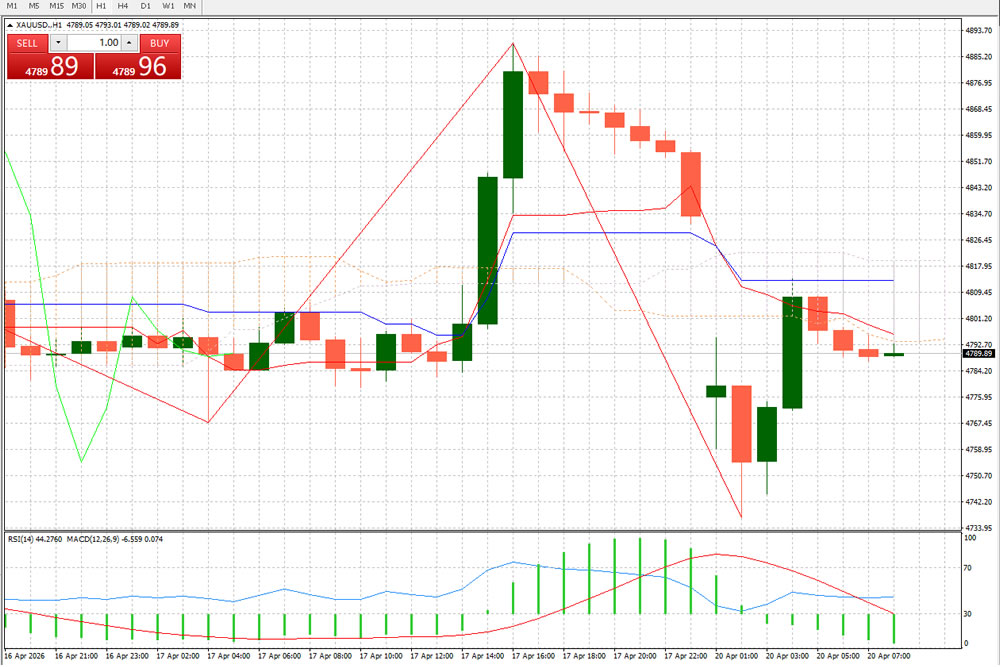
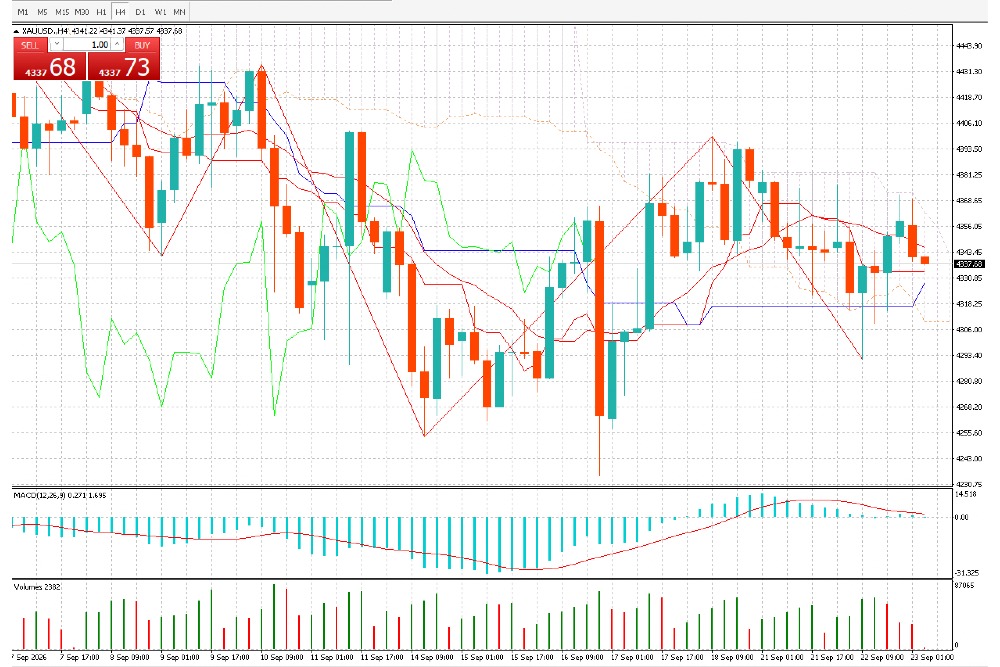
The 1-hour chart of XAU/USD shows that gold has entered a significant technical correction after a sharp rally to near $4,885/oz, currently trading around $4,789/oz.
Trend & Candlestick Structure:
The previous rapid rise formed a clear short-term ascending wedge. Subsequent consecutive bearish candles mark a phase of exhaustion in bullish momentum, with price breaking below the trendline and entering a corrective channel.
A recent large bullish candle with a long lower wick indicates strong buying interest in the $4,750-$4,760 zone, where initial stabilization signals have emerged.
Key Indicator Signals:
RSI(14): At 44.27, the index has fallen from overbought levels to below the neutral zone, signaling a significant weakening of bullish momentum. However, it has not yet entered oversold territory, leaving room for short-term consolidation.
MACD(12,26,9): The histogram remains negative at -6.559, with both fast and slow lines below the zero line, confirming short-term bearish dominance. That said, the histogram is narrowing, suggesting waning downside momentum.
Ichimoku Cloud: Price has broken below both the Tenkan-sen and Kijun-sen, and is currently trading beneath the Kumo (cloud), indicating a bearish bias in the near term. The cloud’s top edge forms initial resistance near $4,800.
Key Price Levels:
Resistance: The first resistance lies around $4,800 (cloud top and previous swing low). A decisive break above this level could open the door to a retest of the $4,830 zone.
Support: Immediate support is in the $4,750-$4,760 range (recent lows and the swing low from the pullback). A breach here would target the next key support near $4,720.
- Fundamental & Market Sentiment Analysis
Geopolitical Developments:
Escalating tensions in the Middle East over the weekend were the immediate trigger for gold’s gap-down open on Monday. The U.S. seizure of an Iranian vessel in the Gulf of Oman and Iran’s rejection of new talks reignited shipping risks in the Strait of Hormuz, which should theoretically boost safe-haven demand for gold.
However, the market reaction proved short-lived. After the initial panic sell-off, prices quickly found a floor, suggesting that geopolitical risks have been partially priced in, and investor sentiment has stabilized.
Macroeconomic & Monetary Policy Outlook:
Fed rate-cut expectations remain the core driver for gold. With recent U.S. inflation data cooling, market pricing for a September rate cut has risen, pulling U.S. Treasury yields lower and providing medium-term support for gold.
In the short term, volatile U.S. dollar index and shifting expectations around the Fed’s easing timeline have amplified gold’s choppy price action.
Supportive Factors:
The long-term trend of central bank gold buying remains intact. The People’s Bank of China has continued its monthly purchases, providing a solid fundamental floor for gold and limiting the scope for a deep correction.
- Market Outlook & Trading Strategy
Gold is currently in a technical correction phase following a period of high volatility, with significant two-way trade. While the technical picture favors bears in the very near term, strong support levels combined with constructive medium-term fundamentals suggest the market is likely to consolidate and build a base in the short run.
Short-Term Trading Strategy: Monitor price action within the $4,750-$4,800 range. A bounce from support at $4,750 could present a buying opportunity targeting $4,800. Conversely, a rejection at $4,800 could offer a short-term selling opportunity targeting $4,760, with stop-losses strictly enforced.
Longer-Term Perspective: The medium-term bullish trend for gold remains intact as long as key support at $4,700 holds. The current pullback may offer an attractive entry point for medium-term bullish positions.
[Disclaimer] Forex trading involves risk; please invest with caution. This content is for informational purposes and objective analysis only, and does not constitute any investment advice, basis for buying/selling, or guarantee of returns. Investors should make independent decisions based on their own financial situation and risk tolerance, and bear their own investment risks.
Related Posts

23/09/2026
23/09/2026