
04/05/2026

Asian stock markets opened generally higher on the day, with crude oil prices fluctuating. Traders are currently grappling with complex situational signals from the Middle East, while the strong earnings performance of major technology companies continues to support the upward momentum of the tech sector, becoming the core driver of the stock market’s rise.
The MSCI Asia-Pacific Index rose 0.4% on the day, among which South Korea’s stock market, a standout in the field of artificial intelligence, saw a significant gain of 2.4%. Previously on Friday, boosted by the strong earnings of major tech companies, the U.S. S&P 500 Index and Nasdaq 100 Index both hit record highs, while U.S. stock index futures fluctuated slightly on Monday. Notably, Samsung Electronics, South Korea’s leading memory chipmaker, saw its quarterly profits surge eightfold, and the performance of such tech giants has become one of the key factors driving the strength of Asian tech stocks.
In terms of geopolitics, U.S. President Trump announced on Monday that the United States will guide ships not involved in the Iran conflict through the Strait of Hormuz starting today. This news boosted market sentiment at the opening, but Iran immediately issued a warning — a senior Iranian official stated that Tehran will regard any U.S. intervention in the Strait of Hormuz as a violation of the ceasefire agreement. It is reported that since the outbreak of the U.S.-Iran conflict, shipping volume through the Strait of Hormuz has plummeted by more than 90%, with the number of daily passing ships dropping from about 130 before the conflict to less than 10, leaving a large number of merchant ships stranded in the Gulf waters. In addition, the chairman of the Civil Affairs Committee of the Iranian Parliament recently made it clear that all traffic through the Strait of Hormuz must obtain Iran’s permission, and hostile countries are not allowed to pass until they compensate for losses.
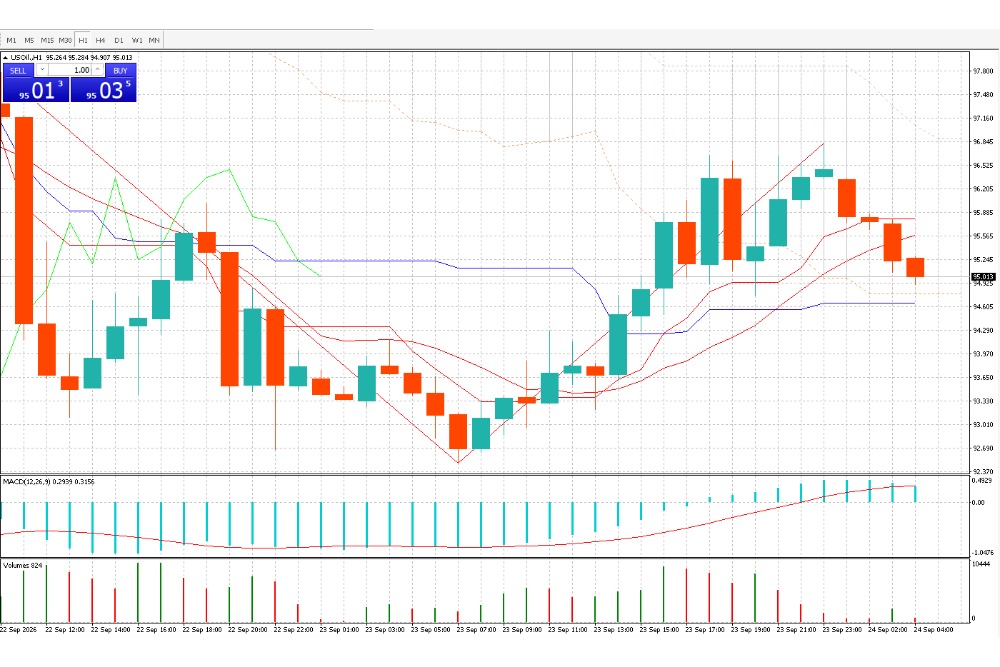
In the crude oil market, Brent crude oil prices fluctuated significantly on the day, falling 2.4% to $105.55 per barrel at one point, then gradually recovering lost ground to above $108 per barrel. Currently, international oil prices are in a high-level volatile state affected by factors such as the U.S.-Iran standoff and blocked navigation in the Strait of Hormuz, with many institutions even bullish on oil prices to a high of $150 per barrel.
In the foreign exchange market, the U.S. dollar edged lower against most major currencies. According to reports, after Japan intervened in the market on Thursday to support the yen, the yen strengthened slightly against the U.S. dollar to around 156.94 (as of May 4, the yen-dollar exchange rate was about 0.006373). Meanwhile, U.S. Treasury futures rose, and due to holidays in Tokyo and London, U.S. Treasury cash trading in New York had been suspended earlier.
Regarding U.S.-Iran negotiations, Trump stated after receiving Washington’s response to Iran’s latest war-ending plan that talks with Tehran were “very positive.” Although the uncertainty of the Middle East conflict has not yet been eliminated, these measures may lay the foundation for the smooth flow of energy and the conclusion of a potential agreement between the two sides. However, Trump had previously stated that he “cannot imagine” Iran’s plan being “acceptable,” indicating that there are still obvious differences between the two sides.
According to Iran’s semi-official Tasnim News Agency, Iran’s proposed peace plan calls for a complete end to the conflict within 30 days and a guarantee of no further attacks. The plan includes three phases, and in addition to the ceasefire requirement, it reiterates Tehran’s previous demands, including the withdrawal of U.S. troops from waters near Iran, the lifting of the naval blockade, the cancellation of relevant sanctions, and the payment of compensation. The first phase clearly proposes converting the ceasefire into a comprehensive truce within 30 days, and gradually opening the Strait of Hormuz and lifting the blockade on Iranian ports. Iran stated on Sunday that it had received the U.S. response to the plan through Pakistan and is currently reviewing it.
These positive news further pushed the stock market higher, which had already risen for a consecutive month before this. Most traders have temporarily put aside concerns about the potential economic impact of the Middle East conflict, and positive signs of corporate resilience have driven the U.S. stock market to its best monthly performance since 2020. At the same time, efforts to convert the fragile ceasefire agreement into a lasting peace, combined with signals of a strong U.S. economy, have jointly driven the S&P 500 Index to rise for five consecutive weeks — the index had previously broken through the key 7,000-point mark for the first time, entering a high-level operating range.
Currently, the trend of risk-taking in the market has spread beyond the stock market. Data shows that the spreads on high-yield bonds have approached their lowest levels in years, and retail investors have flocked to prediction markets and zero-day options. Notably, despite the ongoing Iran war, oil prices exceeding $100 per barrel, and the Federal Reserve hinting that interest rates will remain high for a longer period amid high energy costs, the stock market still maintains a strong upward momentum. Behind this trend is closely related to the potential easing expectations of the Federal Reserve and the resonance effect of U.S. fiscal expansion policies, with the market showing the characteristics of “bearish factors failing to suppress the upward trend.”
[Disclaimer] Forex trading involves risk; please invest with caution. This content is for informational purposes and objective analysis only, and does not constitute any investment advice, basis for buying/selling, or guarantee of returns. Investors should make independent decisions based on their own financial situation and risk tolerance, and bear their own investment risks.
Related Posts

23/09/2026
23/09/2026