
08/09/2026

The precious‑metals market is seeing a tug‑of‑war between opposing forces. A softer US dollar has underpinned a modest rebound in spot gold, erasing losses from the prior session. Nevertheless, geopolitical tensions in the Strait of Hormuz and shifting Federal Reserve rate‑hike expectations have capped upside potential. The US dollar remains the primary driver for gold prices, with geopolitics and monetary policy acting as counterbalancing factors.
Gold received key support from a weakening US dollar and a surging Japanese yen. The yen has extended its rally from last week, trading near its yearly high amid growing market expectations for Bank of Japan rate increases. Further depreciation in USD/JPY dragged down the broader dollar complex. The Bloomberg Dollar Spot Index fell 0.1% after a 0.2% drop on Monday. Dollar‑denominated gold became more affordable for global buyers, drawing inflows. Historically, gold and the US dollar exhibit an inverse correlation, and dollar weakness has formed a solid floor for bullion.
Spot gold climbed as much as 0.7% to breach $4,435 per ounce, fully recovering the previous day’s decline. As of 9:42 a.m. Singapore time, spot gold stood at $4,434.02 per ounce, up 0.7%. Other precious metals advanced alongside gold: silver rose 1% to $66.88 per ounce, while platinum and palladium also posted gains across the board.
Two major headwinds prevented gold from breaking out into a sustained uptrend: energy‑driven inflation risks and Fed hawkish pricing. Escalating US‑Iran tensions raised fears of disrupted energy shipments through the Strait of Hormuz. Crude oil moved higher, with benchmark Brent crude approaching $100 a barrel. Rising energy‑cost inflation partially offset safe‑haven demand for gold and limited its advance.
Monetary‑policy expectations present an even more critical downside risk. Markets are pricing in roughly a 60% probability that the Federal Reserve will raise interest rates as early as next week. As a non‑yielding asset, gold tends to underperform when monetary policy tightens. Investors are closely watching US consumer‑price inflation data due later this week; the figures will offer crucial guidance for the Fed’s policy decision at its September 14‑15 meeting and set the near‑term trajectory for precious metals.
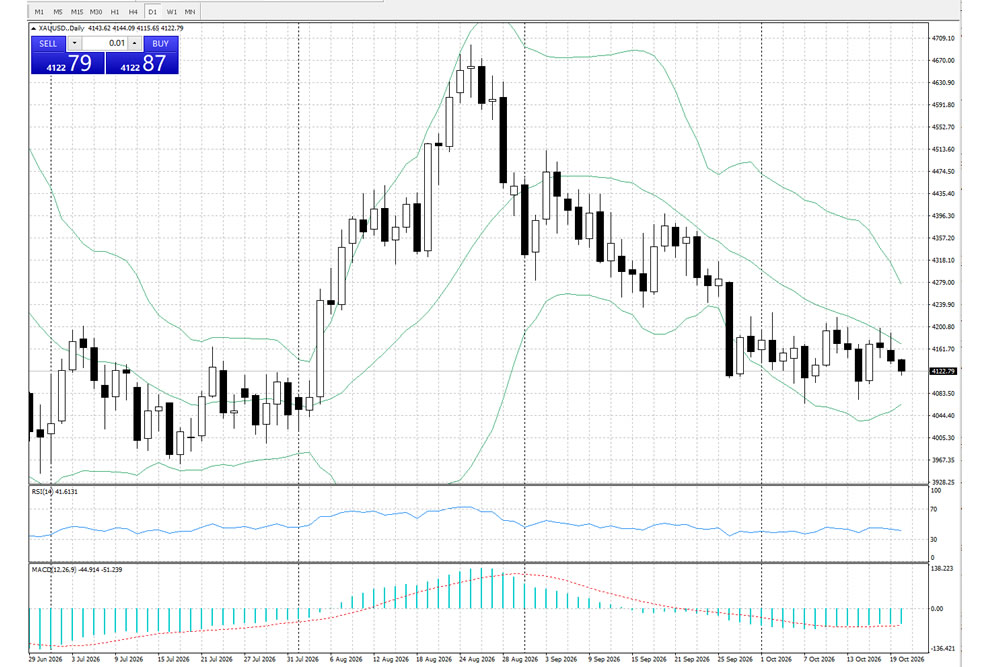
Since rebounding from a low near $4,000 in July, gold has traded within a relatively tight band around the $4,400 level. Traders keep repositioning their portfolios based on shifting Fed outlooks, resulting in range‑bound, choppy conditions without a clear directional trend.
The longer‑term bullish case for gold remains intact despite short‑term hurdles. Gold retains its traditional appeal as a portfolio hedge amid global uncertainty. Central‑bank gold purchases and broader “devaluation trades” evoke the market dynamic that pushed gold close to its all‑time high of $5,600 back in January. Some of the world’s largest asset managers have increased their gold holdings in recent weeks.
Gold is likely to stay range‑bound with a mild bullish bias in the short run. Dollar weakness provides downside protection, yet Fed rate‑hike odds and geopolitical‑inflation concerns will restrict upside. Immediate market focus falls on US CPI prints. Hot inflation data could reinforce hawkish Fed bets and pressure gold; softer readings may trigger a breakout. Over the medium‑to‑long term, sustained central‑bank buying and hedging demand support the bullion narrative, leaving room for further gains after current consolidation.
[Disclaimer] Forex trading involves risk; please invest with caution. This content is for informational purposes and objective analysis only, and does not constitute any investment advice, basis for buying/selling, or guarantee of returns. Investors should make independent decisions based on their own financial situation and risk tolerance, and bear their own investment risks.
Related Posts