

16/10/2026

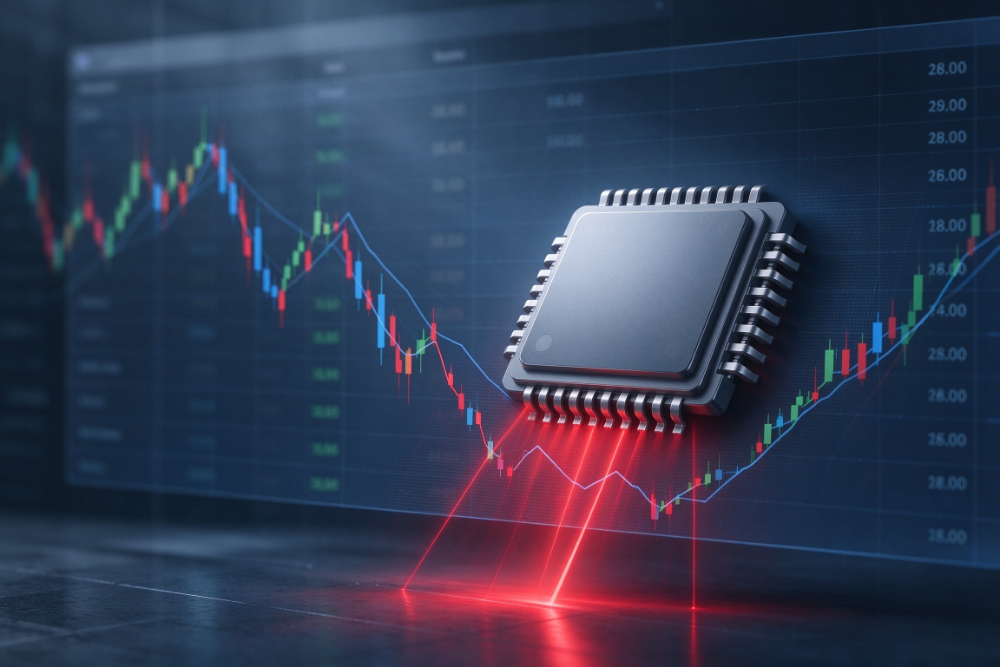
Dip‑buying flowed into Asian markets following a chip‑stock sell‑off driven by concerns over AI‑related trading, pushing regional shares higher while crude oil edged lower.
The MSCI Asia Pacific Index rose 1%, with five times as many stocks advancing as declining. Samsung Electronics and SK Hynix gained in Seoul, lifting the KOSPI almost 3% after it hit an April‑low on Thursday.
Still, caution prevailed. Benchmark U.S. stock futures drifted slightly lower in early Asian trade, with Nasdaq 100 futures down 0.3%. Taiwan Semiconductor Manufacturing Company slipped early on, as its upbeat earnings outlook failed to ease worries over its artificial‑intelligence exposure.
U.S. Treasuries largely held on to Thursday’s gains, which were fueled by safe‑haven demand amid sharp swings across global stock and credit markets this week. Traders are awaiting remarks from Fed Chair Kevin Warsh, who will take part in a fireside chat with IMF Managing Director Kristalina Georgieva in Bangkok.
Indonesian equities are in focus amid risks of removal from global benchmark indexes. Investors are also watching China closely, as the European Union prepares to set up a new trade entity that could effectively cut some Chinese firms off from its single market, part of new measures aimed at narrowing its large trade deficit with China.
The durability of the rebound hinges on whether gains can broaden beyond the tech giants that have driven most of this year’s rally. Wider sector participation would reduce the market’s heavy reliance on AI‑linked stocks, whose concentration risks were laid bare by this week’s violent volatility.
Signs of rotation have emerged on Wall Street. The S&P 500 Equal‑Weighted Index climbed 1.4%, led by healthcare and consumer staples names.
Pressure on chip stocks eased after Nvidia CEO Jensen Huang defended the financial health of AI compute supplier CoreWeave.
“CoreWeave is getting stronger every day, and I am optimistic. Their cost of capital is actually coming down,” Mr. Huang said.
The firm’s credit‑risk gauges hit record highs on Thursday as some of its high‑yield bonds continued to fall in price.
Elsewhere, the FXCG Dollar Index extended Thursday’s losses, after the dollar posted its steepest one‑day drop in more than a month. Gold fell 0.4%, giving up some of the prior session’s gains and trading near $4,155 per ounce.
Global crude benchmark Brent crude declined 0.6% to around $105.30 a barrel. Even so, heightened Middle‑East supply risks have discouraged further strategic reserve releases, keeping Brent on track for a second consecutive weekly advance.
Questions over the sustainability of the AI investment boom have meanwhile spilled into credit markets, as investors scrutinize debt financing for infrastructure build‑outs.
In Warsh’s upcoming speech, traders will hunt for clues on whether Fed officials lean toward another rate hike. Last month, the Fed raised borrowing costs for the first time since 2023, and futures currently price a roughly 25% chance of an October increase.
[Disclaimer] Forex trading involves risk; please invest with caution. This content is for informational purposes and objective analysis only, and does not constitute any investment advice, basis for buying/selling, or guarantee of returns. Investors should make independent decisions based on their own financial situation and risk tolerance, and bear their own investment risks.
Related Posts