

20/07/2026

The ongoing escalation of military conflicts between the US and Iran has triggered fresh volatility across global commodity, bond and equity markets. International oil prices have surged to a one-month high while global bond prices have declined, reigniting widespread inflation concerns. After sharp market turbulence driven by tech stock sell-offs last week, global equities have steadied overall this week with divergent performances across regions.
In the crude oil market, amid cross-border strikes between the two nations that have extended beyond traditional military targets, Brent crude rallied 3.8% at one point to hit $91.42 per barrel, marking its highest level since June. Asian spot trading was closed on Monday due to a public holiday in Japan.
Bond markets faced simultaneous pressure amid rising inflation expectations. US 10-year Treasury futures fell 7/32, while sovereign bonds in Australia and New Zealand also slumped on fears that rising oil prices will fuel inflation. Australia’s 10-year government bond yield climbed 6 basis points to 4.96%. Although US consumer prices posted their first monthly drop in six years in June, key underlying inflation indicators remained largely unchanged, failing to ease market inflation concerns. The latest oil price rebound has put inflation back at the forefront of market attention.
Global stock markets traded mixed with clear divergence. Nasdaq 100 futures edged up 0.2% following a sharp sell-off last Friday, boosted by positive news from Chinese AI startup Moonshot AI. The company disclosed to investors its plan to launch an IPO within six months, and its latest advanced AI model has challenged the long-standing perception of US dominance in the artificial intelligence sector, greatly lifting sentiment in the tech sector.
Regional equity markets showed varied trends. The MSCI Asia Pacific Index was broadly flat, while South Korea’s KOSPI Composite Index fell 2.8% as local traders returned from the Friday holiday and adjusted their holdings. Notably, the widely watched Philadelphia Semiconductor Index entered a bear market last Friday, pressured by the technological breakthroughs of Moonshot AI, prompting investors to reassess the growth logic and competitive landscape of the global tech industry.
The latest market fluctuations come on top of existing uncertainties. Markets have already cast doubts over whether the AI investment boom can sustain the rapid growth of the tech sector. The escalating geopolitical tensions in the Middle East and soaring oil prices have further amplified global market volatility. Previously, mild US economic data had eased market expectations for aggressive Federal Reserve rate hikes, but the resurgence of inflation risks has once again put the Fed’s monetary policy trajectory in the spotlight.
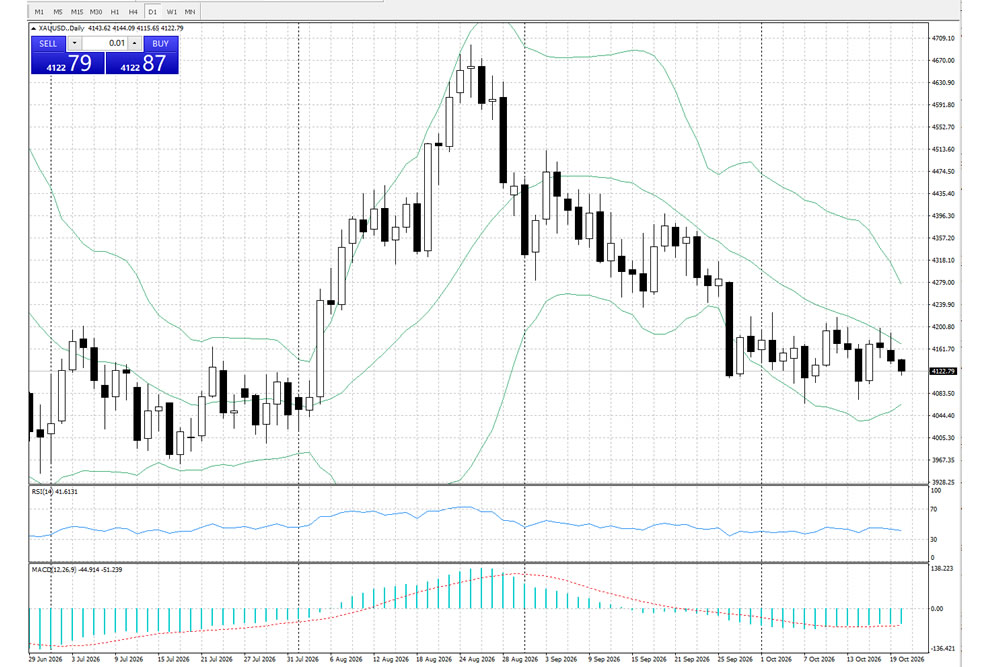
In broader commodity and forex markets, gold extended last week’s losses, dropping 0.4% to around $4,000 per ounce. Higher oil prices have reinforced market expectations of prolonged elevated interest rates, diminishing the appeal of non-yielding gold and weighing on its prices. The US dollar traded mixed against major global currencies with overall muted volatility.
On monetary policy, Federal Reserve Chair Kevin Walsh stated at the Sintra Forum in Portugal earlier this month that price risks have eased in recent weeks. He reaffirmed the central bank’s commitment to bringing inflation back to its 2% target, emphasizing that curbing inflation remains the Fed’s top priority. Market traders are now closely monitoring upcoming US economic data for signs of economic resilience, which will shape expectations for interest rate hikes in September or October.
[Disclaimer] Forex trading involves risk; please invest with caution. This content is for informational purposes and objective analysis only, and does not constitute any investment advice, basis for buying/selling, or guarantee of returns. Investors should make independent decisions based on their own financial situation and risk tolerance, and bear their own investment risks.
Related Posts