24/06/2026

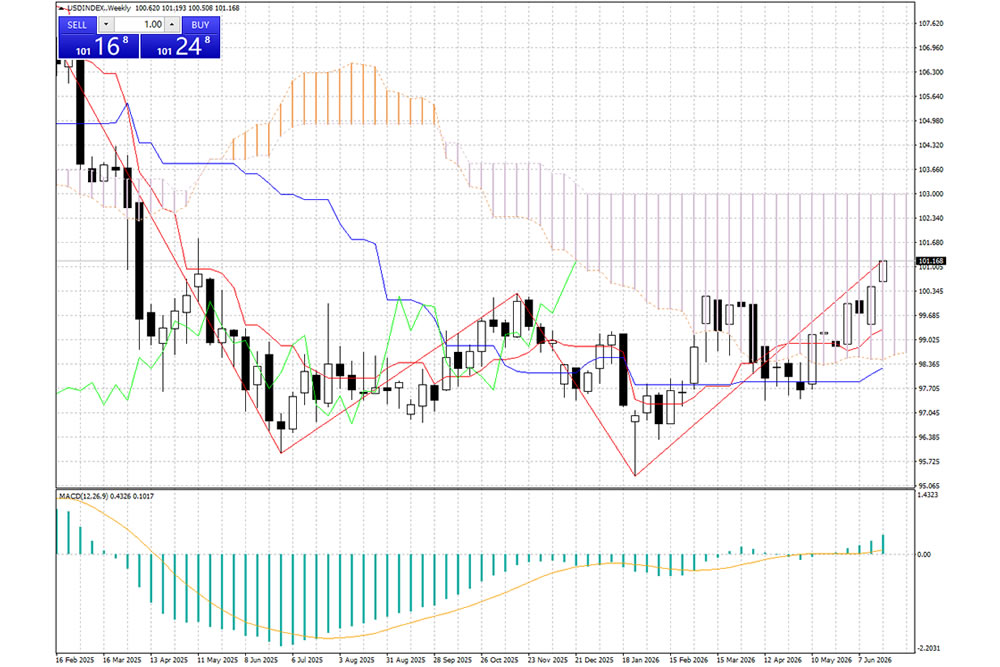
The U.S. dollar climbed to its highest level since last November on Tuesday, as traders solidified bets that the Federal Reserve will raise interest rates later this year.
The Bloomberg Dollar Spot Index rose 0.4% on Tuesday, settling at a seven-month high, underpinned by a growing divergence between the Fed’s policy outlook and those of other major global central banks. Markets are currently pricing in nearly two 25-basis-point rate hikes by the start of 2027. Meanwhile, the cost of hedging against further dollar strength over the next 12 months, relative to downside protection, has surged to its highest level in more than a year, reflecting broad market confidence in the dollar’s upward trajectory.
“The dollar still has room to advance,” analysts at FXCG commented. “The currency typically strengthens during Fed tightening cycles, and the market is now testing the odds of a new rate-hike cycle starting in September.”
Major non-U.S. currencies came under pressure amid the dollar’s rally. The euro slid to a one-year low during Tuesday’s trading session, after European Central Bank President Christine Lagarde’s remarks prompted traders to scale back ECB rate-hike expectations. The Japanese yen remained weak, as investors believe the Bank of Japan’s gradual tightening pace is too slow to prop up the currency, keeping markets on alert for possible official foreign exchange intervention.
The U.S. dollar has appreciated 1.7% so far this year, supported by its safe-haven status and a sharp surge in oil prices triggered by U.S. and Israeli strikes on Iran in late February. Although a recent temporary U.S.-Iran agreement has eased upward pressure on energy prices, lingering inflationary pressures have reinforced market expectations for Fed rate hikes to counter persistently elevated costs.
[Disclaimer] Forex trading involves risk; please invest with caution. This content is for informational purposes and objective analysis only, and does not constitute any investment advice, basis for buying/selling, or guarantee of returns. Investors should make independent decisions based on their own financial situation and risk tolerance, and bear their own investment risks.
Related Posts
23/09/2026
23/09/2026