The Federal Reserve kept interest rates unchanged amid rising oil prices fueled by the war, causing both stock and bond markets to fall.
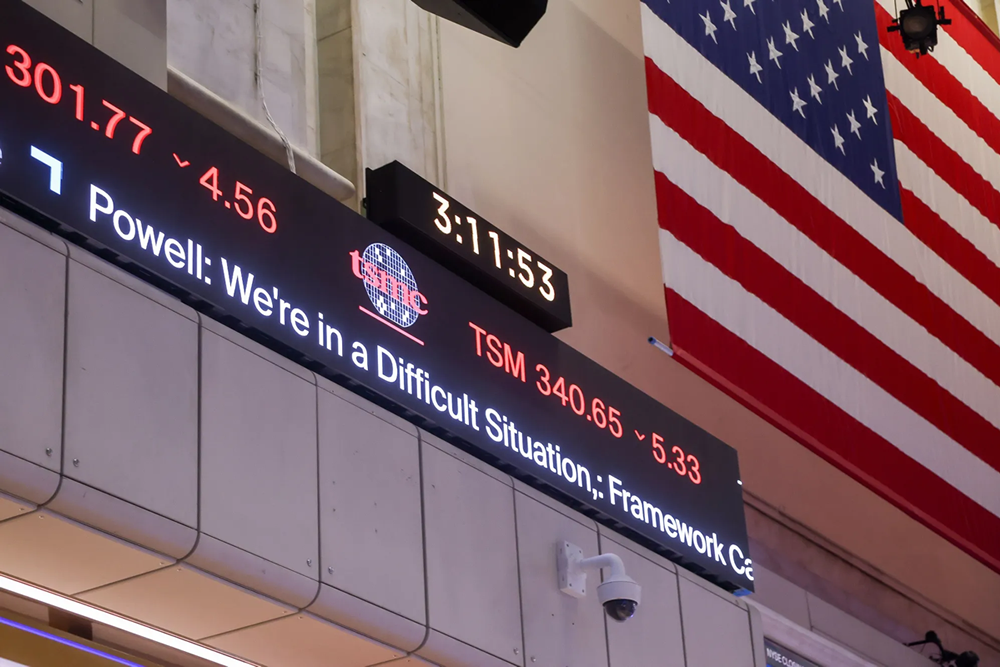
Wall Street remained tense as soaring oil prices led to declines in both stock and bond markets. Meanwhile, Federal Reserve Chairman Jerome Powell stated that the uncertainty surrounding the war’s impact on inflation made future interest rate policy more difficult to predict.
Although the Fed maintained its expectation of two rate cuts in 2026 and 2027, traders reduced their expectations for rate cuts this year. Powell stated that maintaining a moderate tightening of interest rates was crucial, while noting the Fed’s difficult position, which caused US Treasury yields to climb. The S&P 500 fell 1.4%, its biggest one-day drop since the Fed’s statement in 2024. Brent crude oil prices hovered around $110 a barrel in late trading.
Attacks by Iran and Israel on key energy facilities in the Middle East have destabilized markets and complicated efforts to curb soaring energy prices. As the conflict spread to major energy infrastructure in the Gulf region, an integrated facility housing the world’s largest liquefied natural gas export plant suffered “severe damage.”
Federal Reserve officials stated after keeping interest rates unchanged, “The impact of developments in the Middle East on the U.S. economy remains unclear. The Committee is closely monitoring the risks to its dual mandate.”
Powell emphasized that officials must see progress in reducing inflation before resuming rate cuts.
“If we don’t see that progress, then we won’t see rate cuts,” Powell told reporters after the Fed announced its decision.
About 420 stocks in the S&P 500 declined. The yield on the two-year U.S. Treasury note rose 10 basis points to 3.77%. Traders expect the Fed to ease monetary policy by only about 15 basis points this year, less than a full 0.25 percentage point rate cut. The dollar strengthened.
“The economic costs of soaring energy prices are still unclear, so Chairman Powell’s cautious stance on future rate cuts is understandable,” said Alan Zentner of Morgan Stanley Wealth Management. “Since oil supply shocks typically lead to a significant slowdown in economic growth, there may be more room for policy easing than many currently expect.”
The Federal Open Market Committee (FOMC) voted 11-1 to maintain the federal funds rate at 3.5% to 3.75%. Fed Governor Stephen Milan voted against the decision, calling for a 0.25 percentage point cut.
In the economic projections released alongside the decision, officials raised their 2026 inflation forecast to 2.7% from 2.4%. Notably, they also projected core inflation, excluding volatile food and energy prices, to rise to 2.7%.
[Disclaimer] Forex trading involves risk; invest with caution. This content is for informational purposes and objective analysis only and does not constitute any investment advice, buy/sell recommendation, or profit guarantee. Investors should make independent decisions based on their own financial situation and risk tolerance, and bear their own investment risks.
before: FXCG – Gold(XAU/USD) Forex Trading Analysis(18/03/2026)