
Taleb and Citrini Tribune Trigger AI Panic, IBM Stocks Plunge by Biggest Drop in 25 Years
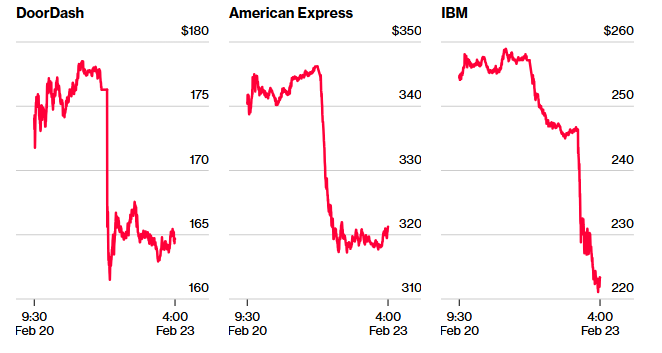
On Monday, another AI “panic trade” erupted, with growing concerns about the disruptive power of artificial intelligence causing stock prices to fall in delivery, payment, and software companies, and resulting in IBM’s stock experiencing its biggest drop in 25 years.
The panic began when a little-known firm called Citrini Research released a bearish report over the weekend.
The report, published on social media on Sunday, outlined potential risks to various sectors of the global economy through hypothetical future scenarios, specifically highlighting the difficulties faced by food delivery services and credit card companies.
On Monday, AI startup Anthropic stated in a blog post that its Claude Code tool could help modernize COBOL, an outdated programming language that primarily runs on IBM computers.
Finally, Nassim Taleb warned that as the AI rally enters a fragile phase, investors should prepare for increased volatility and even bankruptcies in the software industry.
IBM shares closed down 13%, marking their biggest single-day drop since 2000. DoorDash, American Express, KKR, and Blackstone all saw their shares fall by at least 6%. Other companies mentioned in the article, including Uber, Mastercard, Visa, Capital One, and Apollo Global Management, all saw their shares fall by 4% or more.
Citrini Research, founded by James Van Gillen, proposed a scenario where, by June 2028, the disruptive impact of artificial intelligence will lead to mass white-collar unemployment, declining consumer spending, software mortgage defaults, and economic contraction. However, the report explicitly states—”The following are hypothetical scenarios, not predictions.”
Among the various outcomes discussed in this “thought exercise,” Citrini proposed a scenario where the dominance of food delivery apps like DoorDash and Uber Eats is replaced by alternatives based on “ambience coding.”
Responding to Citrini on the X Forum, DoorDash co-founder Andy Fang stated, “We firmly believe that intelligent commerce will revolutionize the entire industry. The industry landscape is changing, and we need to adapt to this change.”
Citrini’s report describes a potential scenario where AI agents save users money by eliminating transaction fees charged by payment processing companies like Mastercard and Visa.
The report states, “We are confident that some of these scenarios will not materialize. As investors, we still have time to assess how much of our portfolio is built on assumptions that will not be realized a decade from now.”
This unsettling illustration has exacerbated anxiety in the stock market. In recent weeks, the stock market has been repeatedly battered by concerns about the disruptive impact of artificial intelligence and geopolitical instability.
While software companies have been hit hardest, stocks of insurance brokers, private lending firms, cybersecurity companies, and even real estate services companies have also been caught in the so-called “AI panic trading.”
However, analysts, strategists, and investors also warn that these reactions are largely exaggerated and likely overestimate any current risks associated with artificial intelligence.
before: Morgan Stanley’s Adams Says Gold-like Swiss Franc Could Surge 17%