FXCG Market Summary: Dollar Weakens, US Stock Futures Pressured by Tariff Uncertainty
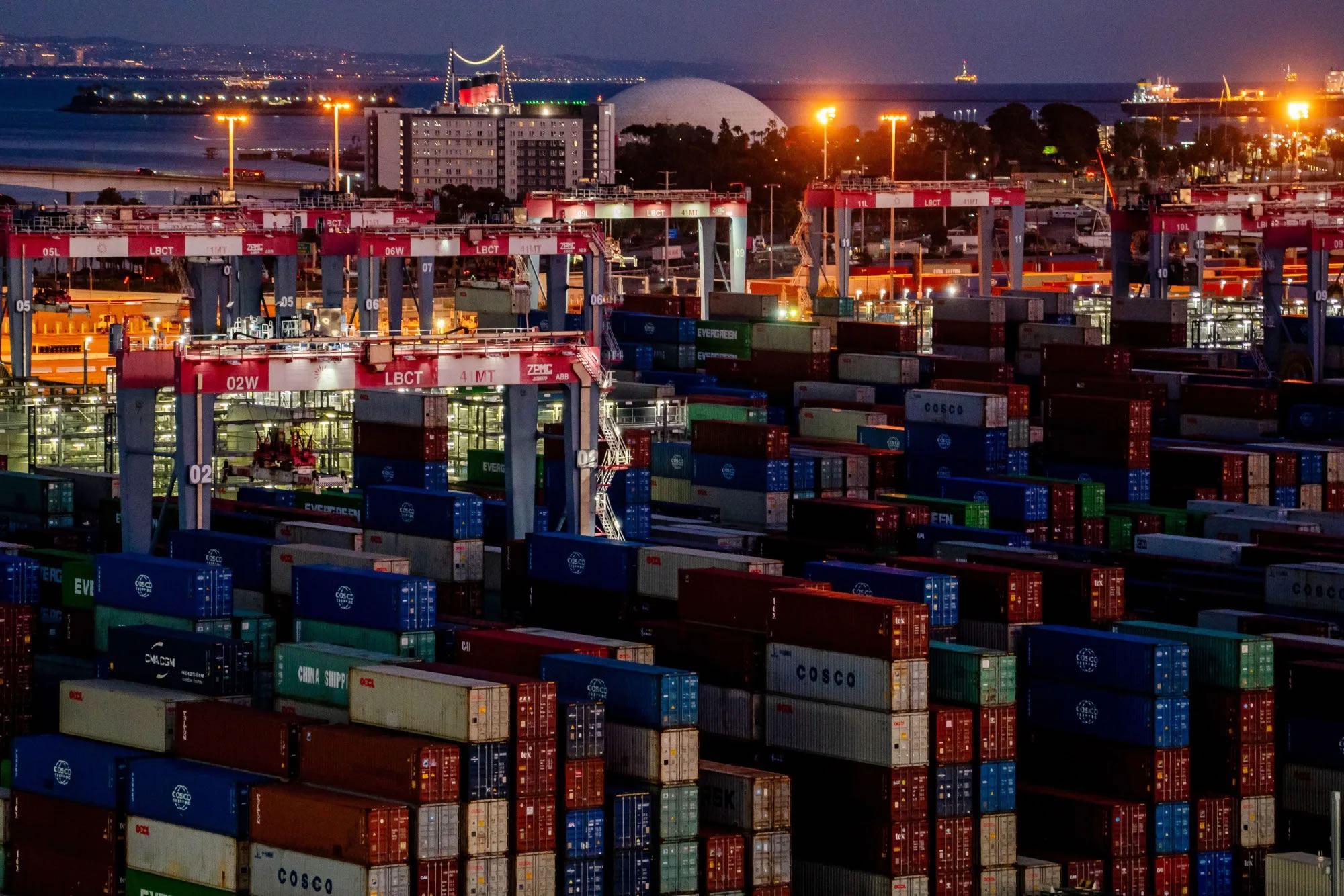
On Monday, both the US dollar and US stock futures declined as uncertainty surrounding US trade policy eroded market confidence in US assets and increased the likelihood of volatility in global markets.
S&P 500 futures fell 0.6%, and Nasdaq 100 futures fell 0.8%. The Japanese yen, Swiss franc, and Swedish krona led gains against the dollar after the dollar index retreated following last week’s rise. Gold and silver rose, while crude oil fell as investors weighed the possibility of a US-Iran nuclear deal.
These moves indicate that investors are beginning to push up risk premiums for US assets. On Friday, hours after the Supreme Court rejected President Trump’s comprehensive reciprocal tariffs, he announced a new 10% tariff on global goods and vowed to use other powers to maintain his signature tariff policy. On Saturday, he indicated he would raise the new tariff to 15%, triggering renewed economic turmoil.
Given the potential for profound impacts on US and Federal Reserve monetary policy, as well as the global economy and businesses, investors are eager to learn the specifics of Trump’s new plan. While Trump has other ways to impose import tariffs, the court ruling invalidates most of the tariffs he implemented during his second term.
This is seen as particularly beneficial for China and India—Asia’s two largest economies that were among the hardest hit by Trump’s tariff policies. Morgan Stanley economists say the weighted average tariff rate in Asia will fall from 20% to 17%.
Asian stock indices rose nearly 1% on Monday, primarily driven by gains in heavyweight technology stocks and mainland Chinese stocks listed on the Hong Kong Stock Exchange. Taiwanese stocks also rose after resuming trading following a week-long holiday.
In other markets, Bitcoin fell more than 4%, dropping below $65,000, while Chinese stock markets were closed for a holiday.
The S&P 500 rose 0.7% on Friday, its best weekly performance since January 9, as optimism from the Supreme Court’s tariff ruling offset concerns about escalating US-Iran tensions. ETFs tracking emerging markets hit record highs. The dollar fell 0.2%, narrowing its weekly gain to 0.6%.
On Friday, the 10-year U.S. Treasury yield rose 2 basis points to 4.08% amid volatility, influenced by mixed economic growth and inflation data, while the tariff ruling exacerbated concerns about a potential budget shortfall. Spot trading of U.S. Treasuries in Asia was closed due to a holiday in Japan on Monday.
On Sunday, tariff tensions escalated further. The European trade commissioner said he would propose suspending the ratification of agreements reached with the U.S.; meanwhile, India postponed negotiations to finalize a temporary trade agreement. Senior U.S. officials said Trump’s loss in the Supreme Court tariff lawsuit would not undermine agreements reached with U.S. partners.
U.S. Trade Representative Jamison Greer said on CBS’s “Face the Nation” on Sunday that agreements reached between the U.S. government and partners, including China, the EU, Japan, and South Korea, remain valid.
before: FXCG Market Report: Week Ahead (February 22, 2026)
next: Morgan Stanley’s Adams Says Gold-like Swiss Franc Could Surge 17%