Falling oil prices boost market sentiment, and Asian stock markets are poised to rise.
Asian stocks are poised to rise as lower oil prices boosted Wall Street, fueled by hopes that more oil tankers will be able to pass through the Strait of Hormuz.
Japanese, Australian, and Hong Kong stock index futures opened higher after crude oil prices fell for the first time in four days on Monday. West Texas Intermediate crude rose slightly in early trading on Tuesday, after falling more than 5% in the previous session.
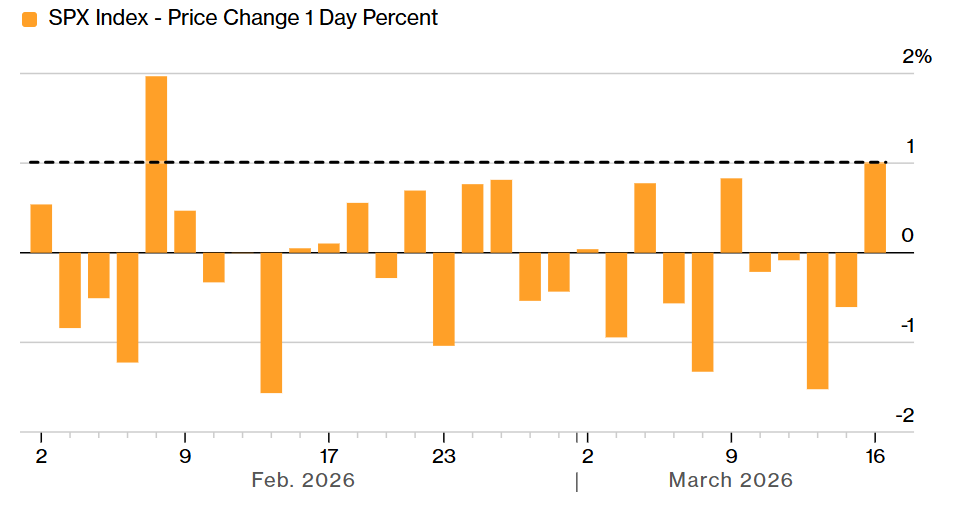
The S&P 500 posted its best single-day performance since February, led by technology stocks. Nvidia shares rose 1.7% after the company said it expects revenue from its artificial intelligence chips to reach at least $1 trillion by the end of 2027. In other sectors, U.S. Treasury prices rose as lower oil prices eased inflation concerns, while the dollar experienced its worst single-day performance in over a month.
President Trump’s renewed call for allies to help secure the Strait of Hormuz also boosted market risk appetite, as markets anticipated that major economies might use oil reserves to offset potential supply disruptions. As investors closely watch a series of central bank meetings this week, the continued threat to navigation security in this vital waterway exacerbates inflation concerns.
“With the ongoing war with Iran, oil prices are influencing market sentiment, and the situation in the Strait of Hormuz is also affecting markets,” wrote Bob Savage, head of market strategy and insights at Bank of New York. “The focus this week is on how central banks are viewing these issues.”
Trump expressed disappointment with other countries that have so far remained silent on his appeals to help ensure the smooth passage of ships through the Strait of Hormuz. Late Monday, he said he had asked China (one of the countries he had sought support for) to postpone its summit with Chinese President Xi Jinping by about a month, stating that he must remain in Washington to direct the war with Iran.
Meanwhile, the International Energy Agency recently agreed to release a record amount of emergency reserves and said it could provide more if needed.
When asked if there were any other measures besides the emergency reserves to mitigate rising oil prices, Treasury Secretary Scott Bessant told CNBC that it depended on how long the war lasted. Bessant noted that oil prices “could be well below” $80 a barrel in a few months.
The effective closure of the Strait of Hormuz has forced countries like the UAE and Kuwait to further cut oil production. Despite this, a small number of ships are still attempting to pass through the waterway.
Meanwhile, a rise in the bond market pushed US Treasury yields down by 4 to 6 basis points across all maturities. US industrial production rose slightly in February, driven by growth in manufacturing and mining. Investors are currently focused on the Federal Reserve’s interest rate decision on Wednesday, which is expected to remain unchanged due to the uncertain outlook for the war.
The Producer Price Index (PPI), a key inflation indicator, is expected to be released on Wednesday. Meanwhile, central banks such as the Bank of England, the European Central Bank, and the Bank of Japan will all hold meetings this week. The market widely expects the Reserve Bank of Australia to announce an interest rate hike today in Sydney.
[Disclaimer] Forex trading involves risk; invest with caution. This content is for informational purposes and objective analysis only and does not constitute any investment advice, buy/sell recommendation, or guarantee of returns. Investors should make independent decisions based on their own financial situation and risk tolerance, and bear their own investment risks.
before: FXCG: US Stock Futures Fall, Crude Oil Prices Rise on Supply Concerns
next: Gold(XAU/USD)1-Hour Forex Trading Analysis(17/03/2026)