
As gold and Treasury bonds fall, long-reliable safe-haven assets are failing.
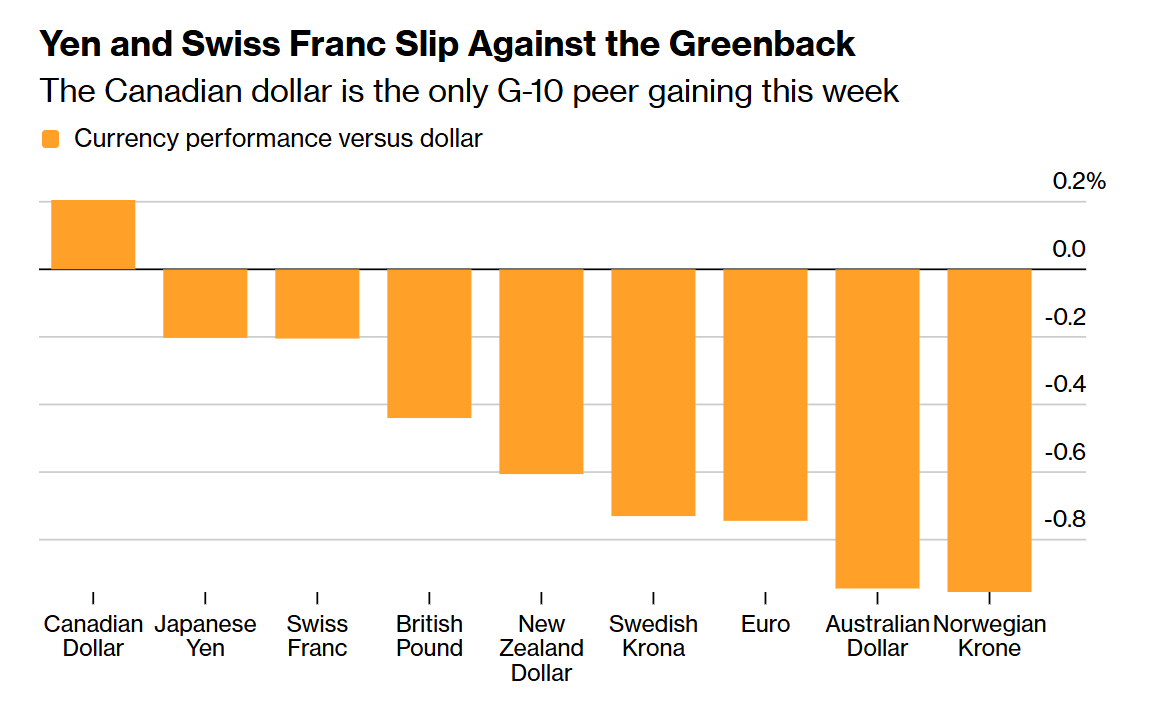
This week, traditional safe-haven assets—Treasuries, the Japanese yen, the Swiss franc, and gold—failed to provide any protection for investors.
The US dollar’s status as a safe-haven asset is increasingly questioned, yet it was one of the few major assets to rise. These movements demonstrate the astonishing speed of market dynamics, with assets once considered reliable safe havens suddenly losing their appeal due to changes in central bank policy and economic growth expectations, as well as volatile trader sentiment.
Here’s a detailed analysis of why commonly used safe havens failed over the past week:
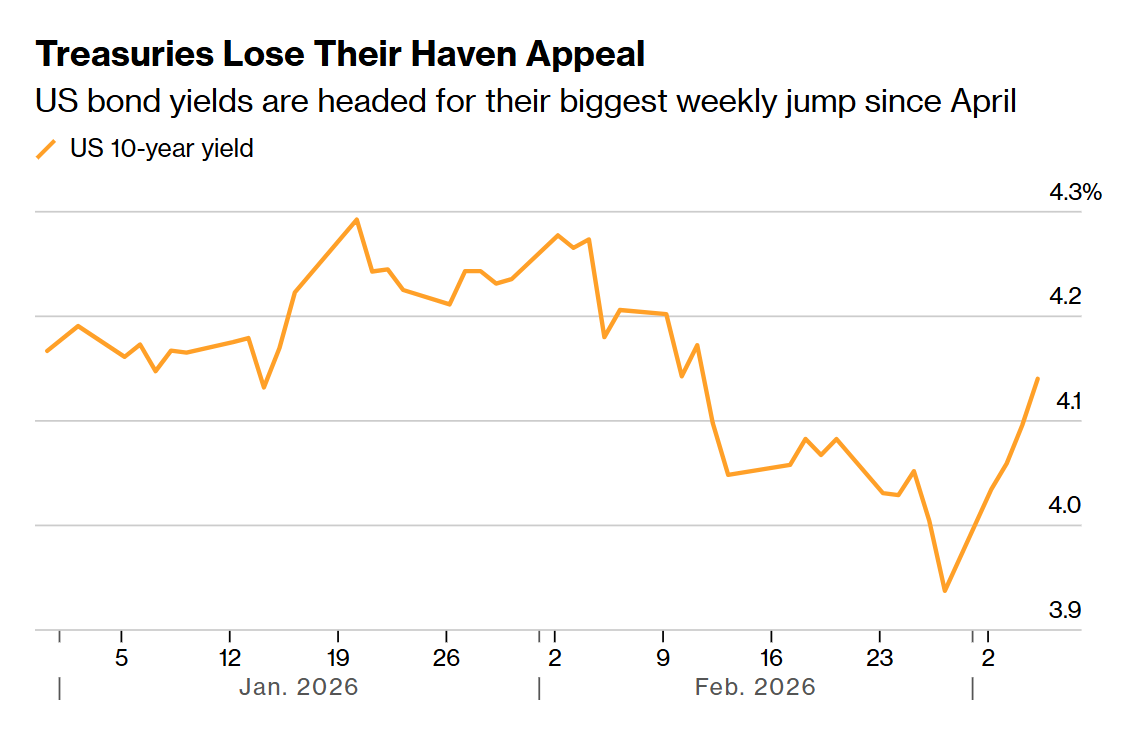
Treasuries: US Treasuries were once considered the safest asset during turbulent times. However, the threat of inflation triggered by soaring oil and gas prices has replaced this demand.
The 10-year Treasury yield rose 20 basis points this week, on track for its biggest gain since the tariff crisis in April. This is a stark contrast to last month, when the yield recorded its biggest drop in a year.
The threat of inflation means traders also expect smaller interest rate cuts. Currently, swap contracts anticipate one or two rate cuts, each between 25 basis points, compared to expectations of three cuts a week ago.
Gold
Gold performed poorly.
Gold prices fell 3.5% this week, mainly dragged down by a stronger dollar and expectations of rising interest rates. This non-interest-bearing metal is typically more attractive when interest rates are low.
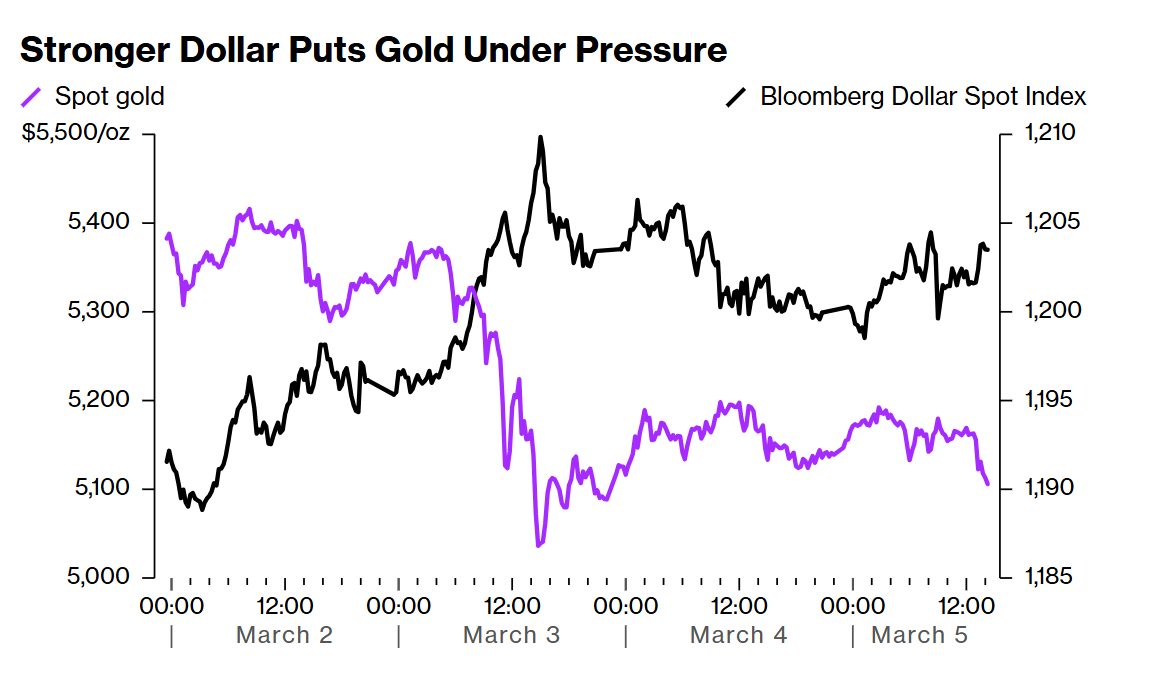
A similar dynamic has played out since Russia’s invasion of Ukraine. Energy prices surged, interest rate expectations and the dollar strengthened—gold prices weakened in the following months. This period has become a common strategy for some traders.
Gold prices have risen by about 54% since mid-August, making it a hotbed of speculation and exceptionally volatile.
Japanese Yen
Ultimately, it all comes down to energy. Japan imports over 90% of its crude oil from the Middle East, most of which passes through the Strait of Hormuz, which has effectively been blocked by the war.
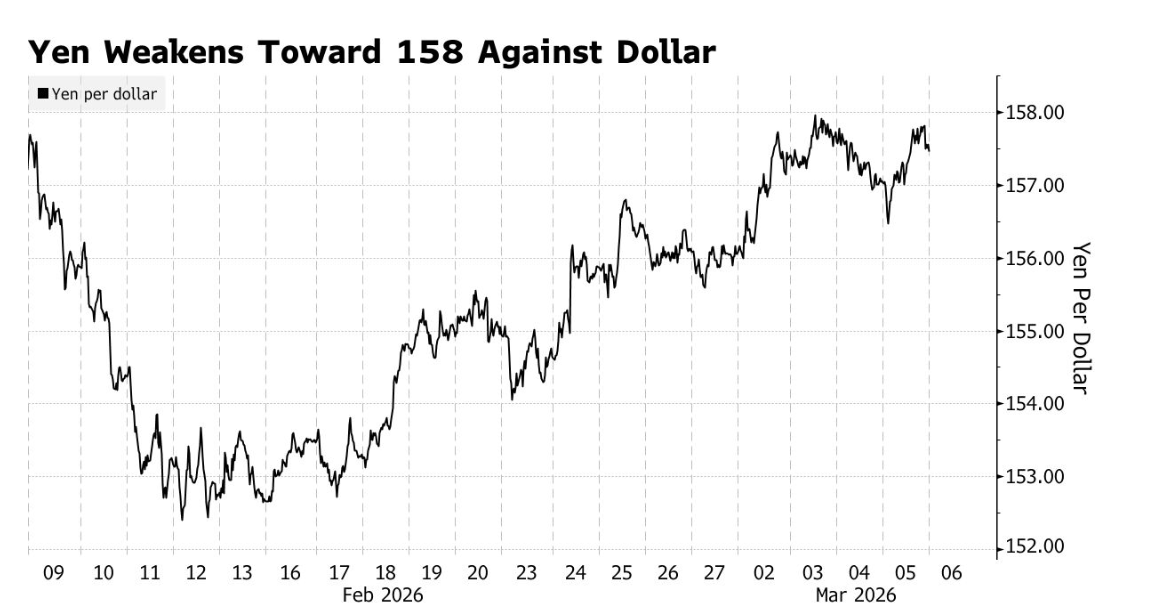
Furthermore, Japanese labor unions are demanding higher wages, and inflation is beginning to pick up.
This could lead to stagflation, rather than demand-driven price growth like the one the Bank of Japan might pursue, which explains why the yen fell about 1% against the dollar this week.
Japanese Finance Minister Katayama reiterated on Wednesday that the government could take action to quell excessive currency volatility, including through market intervention.
The Swiss franc’s low debt, sound policies, and political neutrality have made it a preferred safe-haven currency over the past year. However, its particular vulnerability in currency crises lies in the apparent eagerness of policymakers to intervene and stifle excessive gains.
Swiss National Bank Vice President Antoine Martin stated that the SNB is prepared to intervene to curb the franc’s strength given the turmoil in the Middle East. As a result, the franc fell 1.5% against the dollar this week. He expressed concern that safe-haven inflows could push up the franc and suppress inflation, which has been near zero.
Meanwhile, Barclays currency strategists recommend investors buy the Swiss franc against the yen. They stated that while both currencies face energy risks, the Swiss franc is in a relatively better position. Data from DTCC shows that options trading in the Swiss franc against the US dollar also demonstrates resilience.
[Disclaimer] Forex trading involves risk; invest with caution. This content is for informational purposes and objective analysis only and does not constitute any investment advice, basis for buying/selling, or guarantee of returns. Investors should make independent decisions based on their own financial situation and risk tolerance, and bear their own investment risks.
before: Oil prices and Asian stock markets fell on Friday amid the Middle East conflict.
next: FXCG Market Research Report: Week Ahead (March 8, 2026)