
23/11/2026

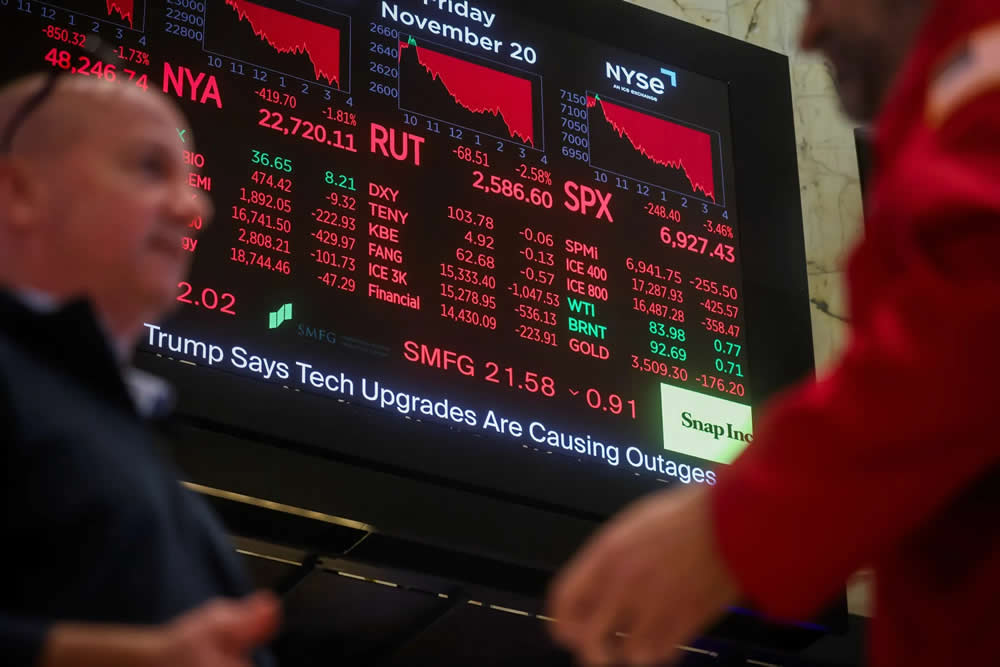
U.S. stock futures rebounded after Friday’s selloff triggered by the unwinding of artificial intelligence trades, as buyers returned to the market. Treasury futures declined and the yen weakened as demand for safe-haven assets ebbed.
S&P 500 futures rose 2.1% after the index fell for a seventh straight session on Friday, entering a technical correction. Nasdaq 100 futures climbed 2.8% after the Asian open, following the tech-heavy gauge’s worst week in more than six years and a near brush with bear-market territory.
Still, caution lingered across Asia. The MSCI Asia Index fell 0.9%, with Taiwan and South Korean stocks both lower, while Japan was closed for a holiday. The MSCI Emerging Markets Index erased all its year-to-date gains.
Elsewhere, U.S. Treasury futures dropped, ending a five-day winning streak. Cash Treasuries did not trade in Asian hours due to the Japanese holiday. Brent crude fell 0.8% to around $91.80 a barrel, while spot gold rose 1% to roughly $3,575 an ounce, snapping a five-day losing streak.
The yen, which had strengthened on safe-haven demand during Friday’s equity selloff, slipped 0.2% to 158.87 per dollar. Bitcoin extended its weekend advance to around $61,255.
Traders in Asia braced for fresh volatility after Wall Street’s so-called fear gauge, the VIX, surged Friday to its highest level since April 2025. The AI fervor that swept investors earlier this year gave way to panic in November, driven by U.S. midterm elections, the leadership crisis at Nvidia, and expectations of further Federal Reserve tightening. Against that backdrop, Asian governments stepped up efforts to backstop markets.
Friday’s decline deepened concerns that the U.S. tech selloff could broaden into a wider risk-off move. The MSCI Asia Pacific Index has dropped about 18% from its June peak, nearing a bear market, with focus on whether authorities can restore confidence and stem further losses.
Officials across Asia intensified efforts over the weekend to halt the slide. China will relax the minimum margin requirement for investors buying securities with borrowed funds. Taiwan expanded short-selling restrictions and said it had begun buying stocks after its benchmark posted its worst weekly drop in 35 years.
South Korean authorities said they would ease daily limits on share buybacks for three months and prepare to activate a market stabilization fund if needed. Local media reported the rescue fund was last used during the 2008 global financial crisis.
Goldman Sachs’ trading desk said last week’s selloff created an excellent opportunity to buy U.S. stocks. However, the bank also cautioned that overall investor positioning remains elevated, meaning the market may not yet have seen the flush-out needed to fuel a meaningful rebound.
[Disclaimer] Forex trading involves risk; please invest with caution. This content is for informational purposes and objective analysis only, and does not constitute any investment advice, basis for buying/selling, or guarantee of returns. Investors should make independent decisions based on their own financial situation and risk tolerance, and bear their own investment risks.
Related Posts