
Trump Extends US-Iran Negotiation Deadline; Asian Stocks May Face Pressure to Fall
27-03-2026 from:www.fxcg.com author: FXCG
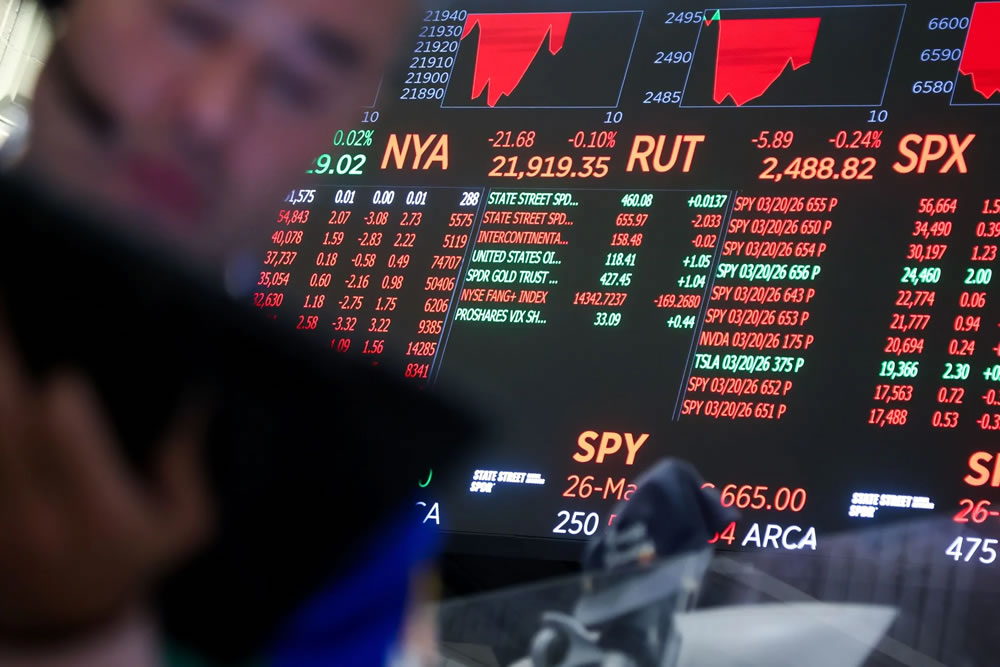
US President Donald Trump has recently once again delayed the deadline for reaching an agreement between the United States and Iran, extending his commitment not to attack Iran’s energy facilities by 10 days and stating that the negotiations between the two sides are making “very good progress.” Although this move has brought a glimmer of relief to the global energy market hit by the conflict, Asian stocks still face downward pressure after the sharp drop on Wall Street.
Affected by the market’s uncertainty about the US-Iran situation, Wall Street stocks first came under pressure. The S&P 500 Index fell 1.7% on Thursday, and the Nasdaq 100 Index dropped as much as 2.4%. Following closely, the Asian market benchmarks also showed weakness. Stock index futures in Japan, Australia and Hong Kong, China all declined, indicating that the region’s stock markets are in for a tough trading day. At the same time, crude oil prices and the US dollar exchange rate rose in tandem. Among them, Brent crude oil prices surged by about 5% on Thursday, and even climbed to $108.01 per barrel at the close on March 26, with a gain of 5.66%.
The continuous rise in energy prices has further intensified market concerns about inflation, directly putting pressure on US Treasury bond prices. Coupled with the weak Treasury bond selling, the Treasury bond market has experienced increased volatility. Data shows that the yield on the 10-year US Treasury note rose by 8 basis points to 4.41%, while the yield on the 2-year Treasury note, which is more sensitive to policy, increased by 10 basis points to 3.99%.
These market fluctuations have continued the trend over the past month — since the United States and Israel launched air strikes against Iran about a month ago, geopolitical tensions have continued to impact global markets. The air strikes led Iran to effectively close the Strait of Hormuz, severely hindering global oil transportation. Since March, the number of merchant ships passing through the strait has dropped by 95% compared with before the conflict, and the original daily oil transportation volume of about 20 million barrels has plummeted to less than 10% of the pre-war level. This series of turmoil highlights that the direction of the geopolitical conflict remains unclear, and investors find it difficult to judge whether the hostile actions are about to de-escalate or escalate further.
Looking back at the development of the situation, Tehran previously rejected the peace agreement initiative proposed by Washington. Trump then threatened to step up military operations against Iran, clearly stating that “the United States will continue to strike them unless Iran agrees to stop the conflict,” indicating that there are huge differences between the two sides in the negotiations to end the conflict. However, according to Iran’s semi-official Tasnim News Agency, Iran has responded to the ceasefire proposal through intermediaries a few days ago and is currently waiting for a further reply from the US side. Tehran has also put forward a series of ceasefire conditions, including requiring the United States and Israel to guarantee that they will not resume attacks. It is worth noting that at a cabinet meeting on March 26, Trump denied being eager to reach an agreement with Iran, insisted that US military bombings against Iran are still ongoing, and claimed that Iran is the one seeking to restart negotiations, which is in a certain contrast to his previous statement that “the negotiations are making very good progress.”
To alleviate the shipping difficulties in the Strait of Hormuz, US Treasury Secretary Scott Bessent stated that a US insurance plan aimed at promoting shipping in the strait is about to be launched. It is reported that this plan, led by the US International Development Finance Corporation, will provide rolling coverage for losses of up to $20 billion, focusing on covering maritime war risks to address the skyrocketing insurance rates in the region during the conflict. However, some analysts point out that this amount is far from sufficient to cover the potential risks of passing oil tankers, and the core concern of shipowners is still navigation safety rather than insurance. In addition, Trump also mentioned that Tehran has allowed 10 oil tankers to pass through the Strait of Hormuz, the “lifeline” of global energy transportation.
Affected by the ongoing conflict in the Middle East, the global energy market has been severely impacted. The price of Brent crude oil, the global benchmark for crude oil, has risen by nearly 50% within a month. The near-complete closure of the Strait of Hormuz has not only led to the loss of millions of barrels of oil production per day, but also pushed up the prices of refined oil products such as diesel and aviation fuel, which in turn has had a chain reaction on the global economy. According to statistics, since the outbreak of the conflict, the total daily oil production of Iraq, Kuwait, the United Arab Emirates, Saudi Arabia and other countries has decreased by at least 10 million barrels, equivalent to 10% of the global oil supply.
On the Asian market front, a number of important economic data will be released this Friday, including the Philippines’ trade data, China’s industrial profit data and Thailand’s manufacturing production data; at the same time, Japan plans to issue 4.7 trillion yen of 3-month treasury bills. These data and measures will further affect the performance of Asian stocks on the day.
[Disclaimer] Forex trading involves risk; please invest with caution. This content is for informational purposes and objective analysis only, and does not constitute any investment advice, basis for buying/selling, or guarantee of returns. Investors should make independent decisions based on their own financial situation and risk tolerance, and bear their own investment risks.
before: FXCG – USOil 1-Hour Forex Trading Analysis(26/03/2026)
next: FXCG – Gold(XAU/USD)1-Hour Forex Trading Analysis(27/03/2026)