Asian stocks may open lower due to falling government bonds
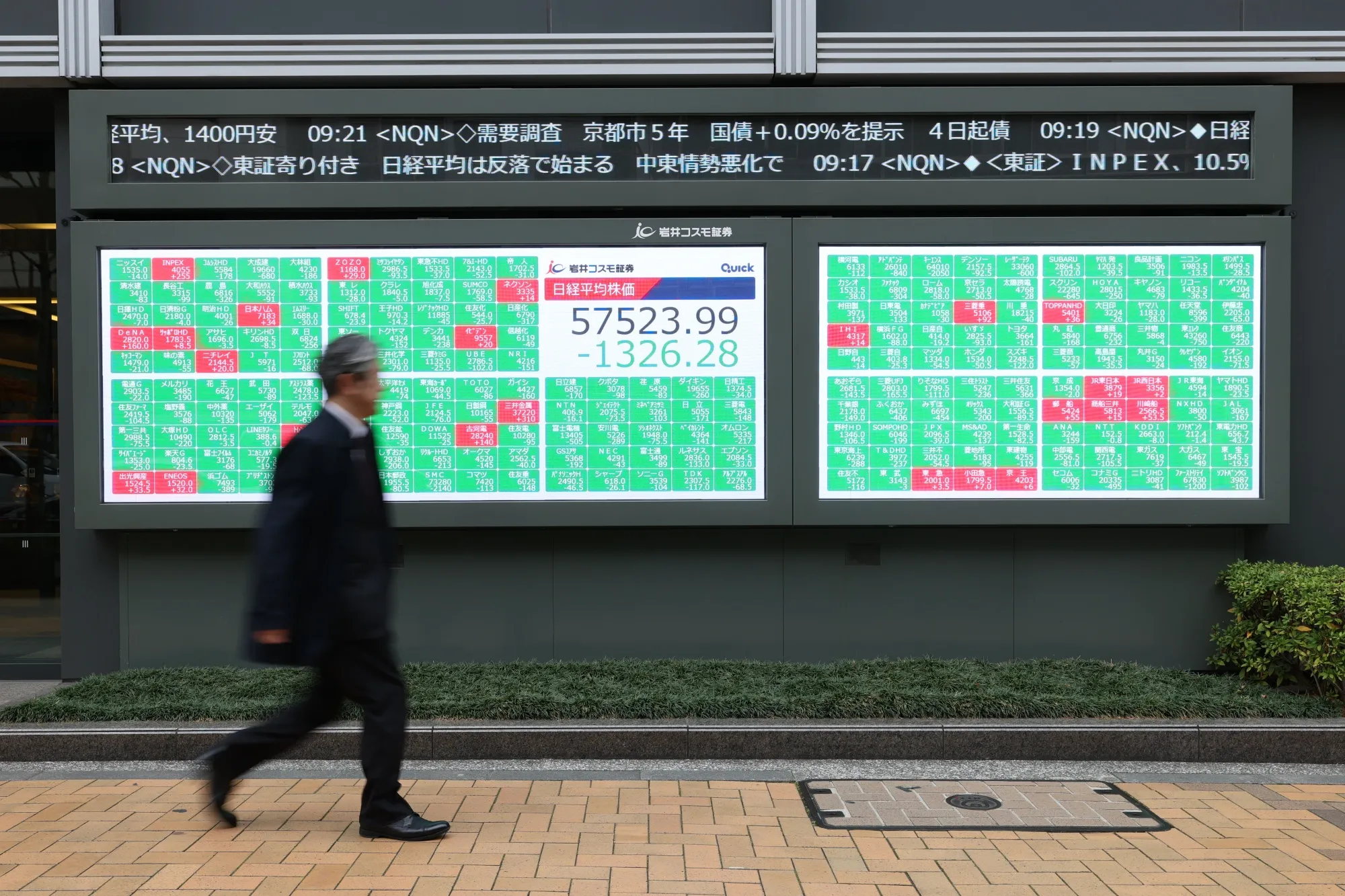
On Tuesday, Asian stocks faced renewed pressure as the Iran war caused oil prices to surge, triggering inflation concerns and dragging down bond prices, while US stocks erased early losses. The dollar and gold prices rose as investors sought safe-haven assets.
Japanese stock index futures fell, and Australian stocks opened lower. Hong Kong futures contracts rose, and South Korean stocks rebounded after a long weekend. The S&P 500 closed flat on Monday, after earlier losses, but subsequently recovered somewhat; the Nasdaq 100 rose 0.1%. US stock index futures contracts edged lower in early Asian trading on Tuesday.
Near-paralyzed traffic in the Strait of Hormuz and the shutdown of a major Saudi Arabian refinery highlighted threats to oil supplies. On Monday, West Texas Intermediate crude oil prices rose more than 6%, while European gas prices surged due to Qatar’s closure of the world’s largest liquefied natural gas export plant.
Concerns that rising energy costs will push up inflation and limit the Federal Reserve’s easing policies weighed on the bond market. The 10-year U.S. Treasury yield rose 10 basis points to 4.03%. Traders have largely priced in the first U.S. rate cut in September, while expectations for a third cut in 2026 have virtually disappeared. The dollar rose 0.7%.
As the U.S. and Israeli attacks on Iran sent shockwaves through the Middle East, President Donald Trump insisted there was no fixed timetable, while Defense Secretary Peter Hergses dismissed the idea of an “endless” war with Iran.
Secretary of State Marco Rubio stated that the U.S. military would escalate its strikes against Iran, adding that “the most intense strikes from the U.S. military are yet to come.” He added that the next phase of punishment against Iran would be more severe than it is now.
Gold prices rose slightly by 0.3% in early trading on Tuesday, after briefly breaking through $5,300 an ounce during the U.S. session; silver prices rose 0.6%, nearing $90 an ounce. West Texas Intermediate crude oil prices were stable, slightly below $71 a barrel. Bitcoin prices touched $70,000 on Monday after falling to around $63,000 over the weekend.
The US dollar strengthened against all G10 currencies on Monday as the conflict escalated, while the Japanese yen hovered around 157 against the dollar. Australian 10-year bond yields rose sharply in early trading on Tuesday after Reserve Bank of Australia Governor Michelle Bullock stated that the central bank was “highly vigilant” about the potential impact of the Middle East conflict on inflation expectations and was “fully prepared” to take policy action if necessary.
A team led by Morgan Stanley strategist Mike Wilson believes that unless there is a sharp and sustained rise in oil prices, the Middle East conflict is unlikely to shake their bullish view on US equities.
before: FXCG – Gold (XAUUSD) Market Analysis (March 2, 2026)