
What Does a Weaker Dollar Mean for the Economy?
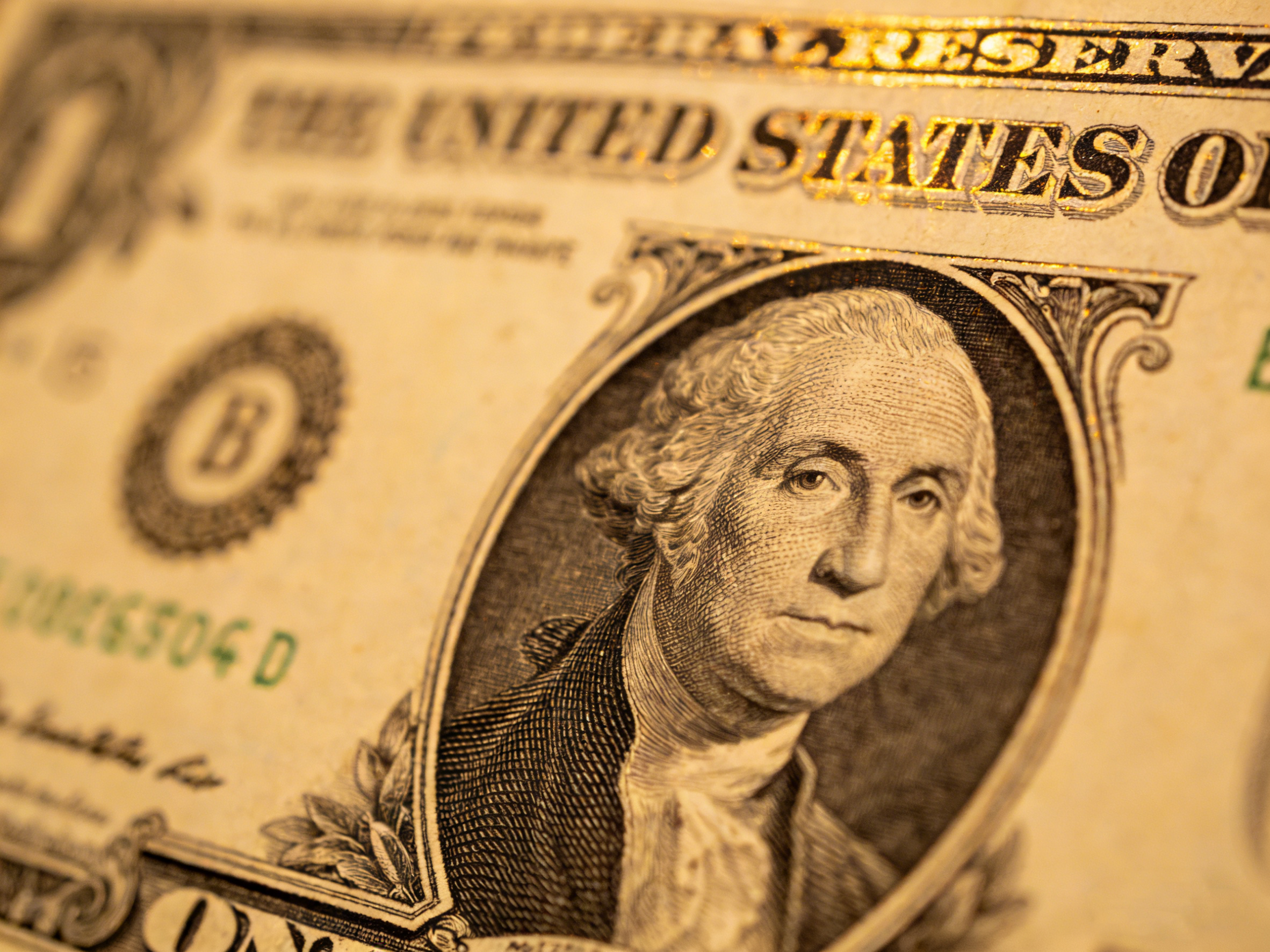
The dollar typically strengthens during periods of economic or geopolitical turmoil, but in 2026, much of the uncertainty and political instability stems from within the United States—and President Donald Trump has expressed support for the resulting dollar plunge. Over the past year, the dollar has fallen 9% against a basket of world currencies, reaching its lowest level since March 2022 in January. And this downward pressure doesn’t appear to be abating.
A weaker dollar has ripple effects on the US and global economies. In the US, rising prices for imported goods increase the cost for US manufacturers and consumers, while making US exports more attractive to overseas consumers.
Here’s what you need to know about the dollar’s decline and what might happen if the dollar remains under pressure.
Why is the Dollar Weakening?
Multiple factors are dragging the dollar down. But analysts point out that the Trump administration’s unpredictable foreign policy, including Trump’s occasional threats to annex Greenland and the military overthrow of the Venezuelan president, is undermining the dollar’s normal role as a safe-haven asset during times of uncertainty. Trump’s repeated attacks on the Federal Reserve’s independence and the possibility of further interest rate cuts have also put pressure on the dollar. Low interest rates weigh on the dollar as investors seek higher savings rates elsewhere.
On the other hand, the Trump administration and many analysts believe the dollar is overvalued, and its recent weakness and the prospect of continued depreciation are a reckoning that the world should have anticipated. During Trump’s first term, he emphasized that for decades, as a cornerstone of globalization, the dollar has been artificially inflated by the rest of the world. Allegations of currency manipulation have been rampant for at least the past two decades. China and other Asian countries have frequently been criticized for artificially depressing their currencies, while European officials have surprisingly admitted they do not want the euro to exceed certain levels.
On February 10, U.S. Commerce Secretary Howard Lutnick stated that the dollar’s current exchange rate may be closer to its true value.
What role does the dollar play in the global economy?
The dollar is the closest thing to a universally accepted currency. It is the cornerstone of international finance and the preferred means of payment in international transactions, used more extensively than any other currency. The US also uses the dollar as a foreign policy tool; for example, after Russia’s full-scale invasion of Ukraine in 2022, the US significantly restricted Russia’s ability to trade in dollars.
How has confidence in the dollar changed?
Analysts point out that the root cause of the dollar’s weakness lies in the Trump administration’s governance style. A dominant currency requires a strong democratic system, the elements of which include the rule of law, an independent central bank, free and fair elections, and freedom of the press. Trump’s second term has tested these fundamental principles. Trump has repeatedly expressed his desire to fire Federal Reserve Chairman Jerome Powell, and the Justice Department has launched an investigation into the renovation of the Federal Reserve headquarters building, a move that a bipartisan panel of lawmakers believes appears to be politically motivated. Trump has also pressured the Federal Reserve to cut interest rates and has made it clear that he wants his nominee for Powell’s successor, Kevin Warsh, to implement this policy, challenging the widely held view that central banks should be free from political influence. Analysts say all of these measures have eroded confidence in the dollar.
Another major source of pressure on the dollar is the US’s massive debt. The US public debt has exceeded $38 trillion, surpassing 100% of GDP, reaching its highest level since the end of World War II. The ever-increasing federal debt has eroded investor confidence in the US’s ability to repay its debts, thus impacting the dollar.
Does the US still want a strong dollar?
The Trump administration has been sending conflicting signals. Trump has frequently hinted that he wants a weaker dollar against other major currencies, believing it will boost demand for US goods. However, he has also stated that he wants the dollar to maintain its status as the global financial anchor.
In recent days, the president seems to have fully accepted the weakening dollar. On January 27, when asked if he was worried about the recent dollar decline, Trump told reporters, “No, I think it’s good.” His remarks almost solidified the view that the dollar would depreciate further.
But Treasury Secretary Scott Bessant made a different statement a day later, reiterating that the US would continue its long-standing policy of a “strong dollar.”
Will the dollar really be shaken?
A complete shift in reserve assets to another currency would require a massive transformation of the global financial, economic, and geopolitical landscape. Given the deep-rooted nature of the dollar, any such shift would be a slow process. The dollar’s dominance is partly due to the sheer size of the U.S. economy—equivalent to the combined size of China (second largest), Germany (third largest), and Japan (fourth largest). As of June 2024, foreign investors held $31 trillion worth of U.S. stocks and bonds, and it will take time for them to gradually exit the market.
Any attempt to replace the dollar requires a currency with a deep and liquid debt market, which no other country can provide. European Central Bank President Christine Lagarde and IMF Managing Director Kristalina Georgieva have recently expressed regret over the lack of a unified debt market in the Eurozone that can compete with the dollar.
More likely, the world will enter a period of multiple currencies coexisting, with the dollar still dominating, but perhaps not as much as it is today.
A weakening dollar: who wins, and who loses?
If the dollar continues to weaken against other major currencies, it could be good news for U.S. exporters and manufacturers. This means that overseas buyers will have greater purchasing power to buy U.S.-made goods as their currencies appreciate against the dollar. However, manufacturing accounts for a much smaller share of the U.S. economy than it did decades ago, meaning any growth in the sector may not be as lucrative as some might imagine. In the 1950s, over 30% of the U.S. workforce worked in manufacturing. Despite Trump’s promises to revitalize U.S. industry, that figure has fallen below 8%.
A weaker dollar could further complicate the U.S. economic outlook, as it tends to fuel inflation, forcing U.S. consumers to pay more for non-U.S.-made goods.
If the weakness continues, it could push up interest rates, leading to higher costs for mortgages, auto loans, and credit card debt, causing pain for consumers.
Rising interest rates also mean the U.S. government will have to spend more to cover the budget deficit, potentially prompting Congress to consider significant budget cuts.
Has this happened before?
Discussions about a declining dollar are frequent. In the 1990s, the yen was considered a potential competitor to the dollar. In the early 21st century, the euro was once seen as a challenger, but the subsequent European credit crisis weakened its position.
Events in the United States, including the 1971 withdrawal from the gold standard and the 2008 financial crisis, also threatened the dollar’s dominance. However, the dollar survived each time, largely due to the strength of the US economy and the absence of significant competitors at the time.
before: Taleb and Citrini Tribune Trigger AI Panic, IBM Stocks Plunge by Biggest Drop in 25 Years
next: Daylight Saving Time (DST) 2026 Adjustment – MT4 Server Time Update